Month: November 2025

  • How JPMorgan, BlackRock, and Sovereign Funds Shape the Next Crypto Cycle

    How JPMorgan, BlackRock, and Sovereign Funds Shape the Next Crypto Cycle

    In the global theater of digital assets, a noted skeptic has taken a definitive step. This act marks a significant structural participation. JPMorgan once criticized Bitcoin. They called it a “pet rock.” However, they have quietly become a major institutional anchor of the Ethereum ecosystem.

    The firm’s recent 13F filing reveals a 102 million dollar position in BitMine Immersion Technologies. The company has performed a strategic pivot. It shifted from Bitcoin mining to massive Ethereum reserve accumulation. BitMine now holds more than 3.24 million ETH, modeled on the MicroStrategy treasury playbook but updated for a programmable era. Crucially, JPMorgan did not enter during a peak. They executed this move during a period of market correction. It was also a time of retail exit.

    The BitMine Entry—Evolution of the Treasury Logic

    The BitMine stake represents the transition from “Bitcoin as Gold” to “Ethereum as Infrastructure.” The previous cycle focused on the simple hoarding of digital scarcity. In contrast, the 2025-2026 cycle is defined by Programmable Collateral.

    • Chaos as a Discount: JPMorgan entered the scene. Crypto ETFs recorded over 700 million dollars in outflows. Additionally, DeFi protocols faced significant exploits. For the institutional analyst, chaos is not a risk to be avoided. It is the only time a structural discount is available.
    • Codified Conviction: JPMorgan has taken a 2-million-share stake in an Ethereum-heavy proxy. This action signals that it views ETH as a reserve-grade instrument. The instrument has built-in yield-bearing capacity.
    • The Shift: This is not a speculative trade. It is the codification of a new monetary operating system on the bank’s balance sheet.

    First, they criticize the hype. Then, they capture the infrastructure during the silence that follows.

    Custody and the Rise of Institutional Scaffolding

    Across Wall Street, the re-entry into crypto is being choreographed through a series of regulated wrappers and direct-custody “scaffolds.”

    • JPMorgan’s Dual Strategy: Beyond BitMine, the bank expanded its position in BlackRock’s IBIT ETF by 64 percent. This brought the total to over 340 million dollars. This creates a “Dual-Asset Treasury” simulation using both Bitcoin and Ethereum proxies.
    • The BlackRock Anchor: BlackRock has deposited 314 million dollars in BTC. Additionally, they have deposited 115 million dollars in ETH into Coinbase Prime. This is the physical build-out of the “Institutional Pipe.”
    • Sovereign Participation: Sovereign wealth funds—including Singapore’s GIC and Abu Dhabi’s ADIA—are funding the tokenization and custody startups. These startups connect crypto architecture to global trade settlement. They also aid in FX diversification.

    Ethereum as the Programmable Reserve Layer

    Bitcoin once held a monopoly on the “Digital Gold” narrative. That era has officially ended. Ethereum’s ascension is driven by its role as a Monetary Operating System.

    Ethereum presents a post-Bitcoin treasury logic because it offers:

    1. Programmability: It can be used to settle complex contracts and tokenized assets.
    2. Staking Yield: It provides an inherent “risk-free rate” for the on-chain economy.
    3. Deep Custody Rails: Its architecture is better suited for the institutional “Duration” strategies we analyzed in The Privatization of Solvency.

    Political Alignment—The Fair Banking Shield

    The institutional pivot has been accelerated by a fundamental shift in the U.S. Political Atmosphere. Renewed executive orders regarding “fair banking access” have provided political cover for major financial institutions. These institutions now have the support required to integrate digital assets.

    The regulatory hostility of the previous regime is being replaced by Pragmatic Integration. Crypto is no longer being framed as a rebellion against the state, but as a necessary innovation for national competitiveness. This alignment allows banks like JPMorgan to move from “Observation” to “Infrastructure” without fear of sovereign retaliation.

    The Institutional Rehearsal—Four Movements

    Institutional entry is not a single event; it is a choreography performed in four distinct movements:

    1. Observation Phase: During hype cycles, they watch from the sidelines, testing compliance and monitoring volatility.
    2. Correction Phase: During panic, they accumulate quietly via ETFs and equity proxies (the current BitMine stage).
    3. Infrastructure Phase: They build the custody, compliance, and clearing networks to support future scale.
    4. Macro Realignment: They integrate the assets into global FX, trade, and reserve diversification strategies.

    Conclusion

    JPMorgan’s massive stake in an Ethereum reserve proxy is the final evidence that the “Wall Street vs. Crypto” war is over.

    The critic has become the custodian. When institutions re-enter a market, they do not speculate; they codify. What JPMorgan is codifying today—Ethereum as programmable reserve collateral—will become the standard monetary frame of the 2026 global financial map.

  • How the $800 B Tech Sell-Off Cautions Bitcoin’s Long-Term Holders

    How the $800 B Tech Sell-Off Cautions Bitcoin’s Long-Term Holders

    The tech sector saw a sudden 800 billion dollar evaporation in a single week. This event is not an isolated market glitch. It is a Contagion of Conviction. Nvidia, Tesla, and Palantir led a Nasdaq drawdown of 3 percent. It was its sharpest contraction since April. The crypto market mirrored this hesitation.

    Simultaneously, Bitcoin’s Long-Term Holders (LTHs) began distributing their positions into weakness, releasing approximately 790,000 BTC over a thirty-day window. Both markets are currently acting as liquidity mirrors. One is priced on an AI productivity narrative. The other is priced on digital sovereignty. Each is now rehearsing the same choreography: a pause in Belief Velocity.

    The 155-Day Clause—Time-Compressed Conviction

    The threshold defining a Bitcoin “Long-Term Holder” is the 155-day mark. This is a behavioral boundary, not a regulatory one. It is a standard established by Glassnode. Institutional dashboards use it to distinguish between structural conviction and speculative reflex.

    • The Behavioral Border: Statistically, holding beyond 155 days marks the transition from “active trade” to “stored belief.” Spending earlier is categorized as a reflex to market noise.
    • The Temporal Mismatch: In crypto’s high-velocity time logic, 155 days equals a full macro cycle. While traditional investors hold equities for years and bonds for decades, the crypto-native cohort rehearses its conviction quarterly.
    • The Signal: When LTHs distribute 790,000 BTC, they are signaling that the current price has reached its limit. This indicates the end of their “patience premium.”

    The 155-day clause is the quarterly earnings window for crypto conviction. Distribution at this boundary suggests that the market is selling belief, not just assets.

    Mechanics—ETF Fatigue and the Withdrawal of Oxygen

    The institutional pillars that anchored the 2025 rally—spot ETFs and corporate treasury adoption—are showing signs of Structural Fatigue.

    • Negative Inflows: Bitcoin ETF net flows have turned negative, signaling that the “new buyer” pool is currently saturated.
    • The Corporate Pause: Major accumulators like MicroStrategy have slowed their buying cadence, removing the “Sovereign Oxygen” that previously compressed volatility.
    • Tech Parallel: Tech-focused ETFs are experiencing a similar capital drain. Investors are exiting “growth at any price” strategies. They are moving toward the safety of cash or sovereign debt.

    Cross-Market Reflex—Narrative Mirrors

    Tech and Crypto are moving in an emotional tandem because they share the same fundamental fuel: Narrative Liquidity.

    The Choreography of Hesitation

    • In Technology: Investors are questioning whether the AI revenue trajectory can justify trillion-dollar valuations. The “AI Bubble” headlines create a valuation ceiling that prevents new capital from entering.
    • In Crypto: Bitcoin’s premium over its realized price has compressed. The “Digital Gold” narrative has hit a period of stagnation. The spectacle of growth no longer outruns the reality of the price.
    • Shared Risk: Both markets operate under Wrapper Fatigue. The “institutional wrapper” is only as strong as the conviction of the underlying holder. This applies whether it is an AI index or a Bitcoin ETF. When the liquidity withdraws, the volatility returns to its native state.

    The Investor’s Forensic Audit

    To navigate this contagion, investors must distinguish between a cyclical reset and a structural exit.

    How to Audit the Pause

    1. Monitor the 155-Day Distribution: If LTH selling accelerates beyond the 800,000 BTC mark, the “Belief Floor” is moving lower.
    2. Track Tech Multiples vs. BTC Realized Price: If tech valuations normalize while Bitcoin remains defensive, the markets are forking. If they drop in tandem, the liquidity recession is systemic.
    3. Audit “Wrapper Health”: Watch for sustained net outflows from the “Magnificent Seven” and BTC ETFs. In an era of institutionalized assets, the wrapper is the first thing to leak.

    Conclusion

    The $800 billion tech correction and the Bitcoin distribution phase share a single thesis. The market has paused. It is determining if the future still wants to buy itself.

    We are witnessing the limits of narrative liquidity. Capital hasn’t vanished; it has moved to the sidelines to observe the next rehearsal. The market will continue this choreography of hesitation. This will persist until a new structural catalyst arrives. It could be a Fed policy shift or a genuine AI productivity breakthrough.

  • How Google’s Partnership with Polymarket and Kalshi Distorts “Would Have Been” Outcomes

    How Google’s Partnership with Polymarket and Kalshi Distorts “Would Have Been” Outcomes

    The world’s primary cognitive interface has undergone a structural mutation. Google has begun integrating real-time prediction market data from Polymarket and Kalshi directly into Google Search and Google Finance.

    Users querying “Will the Fed cut rates?” or “Who will win the next election?” no longer receive just a list of articles; they receive live market probabilities. What began as a Labs experiment has been codified into search engine infrastructure. This marks the transition from Retrieval to Prediction. Instead of retrieving facts about the past, users are now retrieving futures. By embedding financial probabilities into everyday cognition, Google is reframing how the citizen-investor interprets reality.

    The Architecture of Integration—Regulated vs. Protocol

    The integration brings together two distinct logics of forecasting, using Google as the common interface to grant them mainstream legitimacy.

    • Kalshi (The Regulated Rail): Operating under U.S. Commodity Futures Trading Commission (CFTC) oversight, Kalshi provides event contracts on GDP growth, inflation thresholds, and legislative outcomes. It represents the “Law on the Books” logic—regulated, compliant, and institutional.
    • Polymarket (The Protocol Rail): Running on blockchain rails with crypto collateral. Polymarket allows global traders to price the probability of geopolitical and cultural events. It represents “Sovereign Choreography”—decentralized, high-velocity, and beyond direct state control.

    For Google, this is a strategic pivot. The search engine is no longer just an index of information; it is a probabilistic feed of live governance. Kalshi offers the legitimacy of the state; Polymarket offers the reach of the crowd. Together, they form the new infrastructure of “Market Truth.”

    Mechanics—Visibility as a Tool of Governance

    When prediction markets move from specialized terminals to the Google search bar, Visibility becomes Governance. A probability of 70% is no longer a math problem; it is a psychological floor.

    • Belief into Liquidity: Millions of users see a high probability on a specific outcome. They start to behave as though that outcome were already a fact. This visibility converts speculative belief into market liquidity and real-world action.
    • Narrative Velocity: In political and economic domains, the odds now dictate the tempo of media coverage and donor urgency. Media organizations no longer just report on events. They report on the shift in odds. This creates a feedback loop where the forecast drives the narrative.

    Forecasting is no longer a niche for traders. It is a governance rehearsal built into the world’s search bar. Prediction markets quantify belief, but Google codifies its authority.

    The Distortion of Outcomes

    • Elections (Rehearsal vs. Mobilization): Visible odds of 58-41 circulate across social networks, shaping expectations before a single vote is cast. Perceived inevitability can depress turnout or donor urgency, effectively rehearsing an outcome into existence before it is earned.
    • Markets (Policy Responsiveness): A visible 90% chance of a Fed rate cut prompts traders to front-run the decision. The Federal Reserve, conscious of market expectations and the potential for a “Realization Shock,” becomes responsive to the forecast itself.
    • Governance (Lobbying and Will): The odds of enforcing a specific regulation are low. This includes regulations like the EU AI Act. This situation emboldens corporate lobbying. It also softens regulatory will. The forecast of failure induces the inertia that causes the policy to fail.

    When futures are visible, the past becomes speculative. Forecasts no longer describe events; they intervene in them. In this choreography, “would have been” outcomes are overwritten by the weight of visibility and liquidity.

    The Citizen’s Forensic Audit

    We live in an era where probability governs perception. Citizens must move beyond “Fact Checking.” They need to adopt a protocol of “Probability Auditing.”

    • Audit the Source Logic: Is the probability coming from a regulated contract (Kalshi) or a decentralized pool (Polymarket)? The former prices compliance; the latter prices sentiment.
    • Track Liquidity Bias: Markets with more volume seem “more true.” They often mirror whale-driven speculation rather than grounded analysis.
    • Separate Observation from Intervention: Ask if the high probability is a reflection of reality. Determine if it is a tool being used to manufacture it.
    • Look for the “Would Have Been”: Recognize that the presence of the forecast has already altered the baseline. Every visible odd is a nudge in the choreography of public belief.

    Conclusion

    Google’s integration of prediction markets marks a definitive era where probability replaces certainty. The counterfactual collapses under the weight of visibility.

    Prediction markets turn governance into choreography, replacing uncertainty with performative probability. When outcomes aren’t merely awaited, they are rehearsed, traded, and rewritten in real time. The ultimate authority migrates to whoever controls the interface of the forecast.

  • How Consumer Weakness and Margin Squeeze Are Reshaping U.S. Holiday Jobs

    How Consumer Weakness and Margin Squeeze Are Reshaping U.S. Holiday Jobs

    The U.S. holiday retail season has reached a symbolic threshold. Sales are projected to surpass 1 trillion dollars for the first time in history. To the casual observer, this figure suggests a booming economy and a resilient consumer.

    However, the trillion-dollar milestone is an Optical Illusion. While the headline suggests expansion, the architecture of the season reveals a structural retreat. U.S. retailers are currently hiring fewer seasonal workers than at any time since the Great Recession. We are witnessing Nominal Expansion. This is a regime where inflation, pricing power, and automation sustain the spectacle of growth. Meanwhile, the human and volume-based foundations of the industry continue to thin.

    The Trillion-Dollar Mirage—Price vs. Volume

    The National Retail Federation’s estimate of a $1 trillion season marks a steady climb. It increased from $964 billion in 2023. In 2022, it was $936 billion. Yet, when adjusted for the structural inflation of the last three years, real growth is near zero.

    • The Paradox: We are experiencing the most expensive holiday season on record, but not the most active. Fewer goods are being moved across the counter, but at significantly higher price points.
    • The Spending Pivot: PwC’s 2025 outlook shows a 5 percent decline in average household spending. Gen Z is cutting back by nearly a quarter.
    • The Spectacle: Retailers are maintaining topline optics by focusing on high-margin essentials and premium electronics. Meanwhile, the middle-market discretionary volume—the true engine of a healthy economy—is in a state of fatigue.

    Profitability has learned to grow without volume. The trillion-dollar headline is a rehearsal of stability, but beneath the surface, the household economy is practicing restraint.

    Mechanics—The Tariff Squeeze and Retail Austerity

    The illusion of growth is being squeezed by a new industrial friction: The Tariff Wall. Tariffs on imports from China and Southeast Asia have fundamentally changed costs. Major players like Walmart, Target, Best Buy, and Dollar Tree are affected.

    • Margin Compression: A KPMG survey found that 97 percent of retail executives saw no actual sales increase. This was due to tariff-related price adjustments. Nearly 40 percent reported shrinking gross margins.
    • Cost Containment: The holiday season has transitioned from a race for market share into a “Cost-Containment Exercise.” Retailers need to protect the bottom line against rising import costs. They have been forced to treat labor as a negotiable variable.

    The Automation Substitution—Revenue Without Headcount

    The most definitive breach in the traditional retail model is the Decoupling of Revenue and Labor. E-commerce now accounts for over 30 percent of holiday revenue, allowing retailers to scale without matching headcount.

    • Efficiency Substitution: Self-checkout kiosks, robotic fulfillment centers, and AI-driven logistics algorithms allow firms to maintain output. These technologies eliminate the need for the seasonal staff that once defined the holiday workforce.
    • Engineered Flexibility: By tightening inventory cycles and reducing store hours, retailers have engineered labor flexibility out of the system.
    • The Result: The seasonal worker has been replaced by a “Digital Proxy.” This change converts a variable labor cost into a fixed capital expenditure for robotics.

    Topline growth and hiring rehearsal are diverging. Optics rise, but opportunity retracts. In this choreography, productivity is merely margin defense disguised as technological innovation.

    The Investor’s Forensic Audit

    To navigate the 2026 retail cycle, investors must move beyond the “Sales Velocity” metric. They need to adopt a protocol focused on Labor Visibility.

    How to Audit the Retail Retrenchment

    • Monitor Hiring Slumps: Treat a slump in seasonal hiring not as a cyclical dip. Instead, view it as a signal of structural transformation. If sales rise while headcount falls, the firm is in “Austerity Mode.”
    • Track CapEx Reallocation: Follow the capital. Is the money being spent on new store formats or on warehouse robotics? The latter signals a permanent retreat from the human labor market.
    • Audit the Discount Cycle: The flattening of discount cycles is evident. There are fewer “doorbuster” events and more algorithmic pricing. This shift indicates a move toward margin preservation over volume growth.
    • Price the Real Growth: Always adjust the trillion-dollar headline against the Consumer Price Index (CPI). If the real volume is negative, the “growth” is a temporary gift of inflation. This temporary growth will eventually hit a demand wall.

    Conclusion

    The U.S. holiday retail season has become a study in Symbolic Economics. We see record sales and record profits, but we no longer see the record employment that once validated those numbers.

    In this statistical theater, the real signal is not the trillion-dollar headline. It is the worker who disappears beneath it. Profitability that grows without people leads to the most fragile expansion. This kind of growth erodes the very consumer base required to sustain the next cycle.

  • How the EU’s AI Act Retreat Codifies Harm

    How the EU’s AI Act Retreat Codifies Harm

    The European Union’s status as the global “Regulator of First Resort” has hit a structural roadblock. The Financial Times reports that the European Commission is considering delaying the enforcement of key provisions in the AI Act. These provisions specifically govern foundation models and high-risk AI systems.

    This is a definitive moment where governance itself becomes a performance. The AI Act was designed as a landmark architecture for digital rights. Its enforcement is now being reframed as Optional Choreography. Under pressure from global technology giants, the bloc is rehearsing the very permissiveness it once sought to discipline. Diplomatic signals from Washington have influenced this change.

    Background—What’s Being Hollowed

    The delay is not merely a postponement of dates; it is an erosion of the Act’s structural integrity. Several core pillars of the original rights-based framework are being softened or deferred.

    • Foundation Model Transparency: Original rules required developers to disclose training data sources and risk profiles. These are being pushed back, effectively shielding the “black box” mechanics of the world’s most powerful models from public scrutiny.
    • High-Risk Oversight: Mechanisms for registering biometric surveillance and hiring algorithms are being postponed. This allows systems with the highest potential for civilian harm to operate without the oversight infrastructure the law promised.
    • Proactive vs. Reactive: Real-time monitoring is being replaced by “periodic review.” This change converts proactive governance into reactive bureaucracy. By the time a violation is audited, the algorithmic harm is already codified into daily life.

    Mechanics—The Dispersion of Algorithmic Risk

    Without the friction of enforcement, algorithmic risk does not vanish; it disperses. This creates a Verification Collapse where harm operates without a visible event.

    • Invisible Accumulation: In the absence of real-time audits, biases go unmeasured. Harm accumulates in the aggregate. Denied loans, misclassified workers, and unaccountable automated decisions occur without ever triggering a “headline” event. These events are difficult for regulators to trace.
    • The Open-Source Loophole: Expanded exemptions for models labeled “non-commercial” allow developers to evade accountability. These models are still integrated into critical infrastructure.
    • Perception Gap: Citizens lose the ability to perceive where the harm originates. When the code outpaces the audit, the system becomes a “Black Box” protected by the state’s own inaction.

    Implications—The Transatlantic Pressure Gradient

    The EU’s retreat signals a deeper geopolitical choreography. European citizen rights have been influenced by a Transatlantic Pressure Gradient. The competitive anxiety of the United States dictates the tempo of regulation.

    • Industry-Led Theater: Big Tech lobbying has successfully reframed rights-based governance as a “disadvantage.” The result is a shift from evidentiary mandates to industry-led Compliance Theater. In this theater, firms perform the optics of safety. Meanwhile, they avoid the architecture of accountability.
    • The Erosion of Sovereignty: This is not an accidental delay; it is a strategic recalibration. Europe is prioritizing “competitiveness” optics over citizen protection, effectively importing American-style regulatory lag into the heart of the Brussels machine.

    The Citizen’s Forensic Audit

    In an era of deferred protection, the citizen-investor must adopt a new forensic discipline to navigate the algorithmic landscape.

    How to Decode the Regulatory Pause

    • Audit the Delay Window: Track which specific “high-risk” systems are granted extensions. These windows are where the highest concentration of unpriced liability resides.
    • Interrogate “Non-Commercial” Labels: If a model is used in enterprise workflows but labeled open-source/non-commercial, the governance is theatrical.
    • Map the Enforcement Gap: Identify jurisdictions where “periodic reviews” replace real-time audits. These zones represent the highest risk for algorithmic bias and systemic error.
    • Track Lobbying Synchronicity: When Big Tech narratives perfectly mirror the “pause” arguments of state officials, the governance has been captured.

    Conclusion

    The EU’s AI Act was meant to be the definitive “Ledger of Truth” for the digital age. Instead, the current choreography suggests a future where compliance is symbolic and protection is a deferred promise.

    In this post-globalization landscape, if a clause is paused, the citizen is not merely unprotected—they are unseen.

  • How BRI Projects Inflate GDP

    How BRI Projects Inflate GDP

    GDP Without Multipliers

    China’s GDP headline continues to print resilience, yet the substance behind the number has hollowed. In 2025, Chinese growth relies increasingly on a strategy of Expatriated Sovereignty. This strategy includes outbound infrastructure projects under the Belt and Road Initiative (BRI).

    Chinese firms construct ports, railways, and power plants across the Global South. This activity is logged as domestic output. It is also recorded as manufacturing and financial flows. On the surface, the Chinese economy seems to be expanding. In reality, it is an externalized performance of growth. This is a choreography designed to sustain macro optics. However, the internal engine of consumption and property remains in a state of fatigue.

    How BRI Projects Inflate the Macro Ledger

    The Belt and Road Initiative functions as a statistical life-support system. The accounting logic of the Chinese state retrieves growth signals. These signals come from projects that physically exist thousands of miles away.

    • Industrial Output as Export: The machinery, steel, and cement are shipped to BRI countries. They are logged as “active trade,” inflating manufacturing statistics. This occurs even when there is no domestic demand for those materials.
    • Service Income: Revenues from foreign construction contracts are reported as industrial services. This income pads the GDP narrative with capital that circulates outside domestic borders.
    • Credit Creation: Loans from Chinese state banks to host governments register as outbound capital flows. This activity raises financial account activity. It simulates a “velocity” that never touches the Chinese household.

    GDP has transitioned from a measure of capacity to a tool of choreography. Beijing exports its excess industrial capacity. This simulates growth that is geographically externalized. The BRI becomes a mechanism for statistical sustenance.

    Mechanics—The Statistical Theater of Outbound Velocity

    The fundamental breach in the Chinese growth story is the Multiplier Gap. Traditional GDP growth relies on internal multipliers—jobs, local spending, and technological spillovers that enrich the domestic base. BRI growth lacks these anchors.

    • Local Labor vs. Domestic Vitality: Construction labor on BRI sites is frequently sourced from the host nations or trapped in isolated enclaves. The wages do not return to stimulate Chinese retail.
    • One-Off Equipment Sales: Unlike a domestic factory that creates sustained demand, a foreign port is often a “one-off” sale. It creates headline motion on the balance sheet but fails to create a durable domestic multiplier.
    • The Repayment Mirage: The initial loan value sits in the headline data. However, repayments are increasingly deferred. They are also renegotiated or written down. The “value” is recorded at the point of issuance, but the “redemption” is often a hollow promise.

    BRI growth is velocity without a multiplier. The balance sheet shows motion, but the household economy shows fatigue. In this regime, projection abroad functions as an economic distraction from the stagnation at home.

    Implications—International Pride vs. Domestic Fragility

    The reliance on externalized growth introduces a profound paradox. Beijing projects global authority through infrastructure diplomacy, yet this very strategy exposes a thinning foundation.

    • The Mask of Expansion: Foreign construction pipelines are used to mask the collapse of the domestic property sector. As long as a train is being built in Africa, the steel mills in Hebei can claim to be productive.
    • The Debt Ceiling: BRI loans in Africa and Central Asia face rising default risks. Meanwhile, local governments within China are hitting debt ceilings. These ceilings prevent genuine domestic stimulus.
    • The Optics of Sovereignty: China is performing the role of a global creditor. However, its own internal liquidity is increasingly constrained. The optics of expansion conceal a base of structural inertia.

    Codified Insight: An economy often rehearses expansion abroad when it has lost the ability to innovate at home. Growth without internal return is not expansion—it is displacement measured as pride.

    The Investor’s Forensic Audit

    Investors reading China’s GDP prints must separate Velocity from Value. To navigate this mirage, the audit protocol must shift from the headline to the composition.

    How to Decode the GDP Mirage

    • Audit Export Composition: Look for “Captive Exports”—materials sent to BRI project sites. These are signals of overcapacity, not market demand.
    • Track Overseas Project Volumes: If GDP stays steady while overseas contract volume spikes, the growth is being manufactured offshore.
    • Monitor Loan Renegotiations: The true leading indicator of China’s macro resilience is the rate of BRI loan write-downs. Every renegotiated loan is a retroactive correction to a previous year’s “growth.”
    • Separate Flow from Multiplier: High-velocity capital flows out of Chinese banks do not equal high-quality domestic growth. If the money isn’t circulating internally, the foundation is thinning.

    Conclusion

    The Belt and Road Initiative was once a vision of “Diplomacy through Infrastructure.” It has been co-opted as a tool for narrative survival. Each new contract props up the GDP storyline, but the foundation of the Chinese miracle is becoming increasingly porous.

    In the age of symbolic governance, China’s growth story is being rehearsed offshore. The number may hold, but the foundation is eroding. For the global investor, the truth is not found in the printed percentage. It is found in the widening gap between the bridge built in the distance and the silent street at home.

  • Black Cube | Monetizing Warfare in the Information Market

    Black Cube | Monetizing Warfare in the Information Market

    In the modern corporate theater, information is no longer merely a resource to be gathered. It is a substrate to be manipulated. Recent revelations from a deposition by a Black Cube co-founder have pulled back the curtain on a sophisticated revenue model. This is referred to as Narrative Control as a Service.

    This business model represents a structural shift in corporate warfare. Private intelligence firms are no longer just “eyes and ears.” They are the choreographers of “Symbolic Disruption.” They transform narrative manipulation and regulatory provocation into high-margin, billable instruments of power.

    Background—The Playtech vs. Evolution Precedent

    The Financial Times reported on the conflict between Playtech and its competitor Evolution. This serves as the definitive high-water mark for covert influence.

    Playtech secretly engaged Black Cube to produce a damaging report alleging illegal operations by Evolution in restricted markets. The result was a choreographed collapse:

    • The Regulatory Fuse: The report triggered intense regulatory scrutiny.
    • The Market Reaction: Evolution’s share price was depressed as the narrative of “illegality” took hold.
    • The Revelation: U.S. court proceedings later exposed Playtech as the architect behind the operation. These proceedings revealed that the “intelligence” was actually a weaponized script.

    This precedent proves that the goal of modern private intelligence is not truth, but Impact. By triggering a regulatory “reflex,” firms can extract value from the resulting market volatility.

    Mechanics—Intelligence as a Market Instrument

    Black Cube’s model codifies the transition from traditional espionage to Narrative Engineering. In this regime, information behaves like capital—it can be leveraged, shorted, or weaponized.

    • Constructed Intelligence: Data is not merely “found.” It is staged through media placements. Operatives are deployed under false pretenses to extract specific, damaging “admissions.”
    • Regulatory Provocation: The firm uses its constructed reports to “prompt” investigations. It leverages the state’s enforcement machinery as a secondary amplifier for the client’s narrative.
    • Perception Management: The infrastructure of influence relies on deploying legal, media, and digital vectors simultaneously. This strategy ensures the target’s reputation erodes before a defense can be mounted.

    Implications—The Architecture of Risk

    For global businesses, the threat is no longer limited to the theft of IP. The risk is now Systemic Manipulation.

    Covert influence operations can distort the focus of regulators. They erode the confidence of institutional investors. These operations reshape public perception in ways that fundamentals cannot fix. Managing this risk needs more than a legal department. It demands Symbolic Counterintelligence. This involves identifying and neutralizing a scripted narrative before it achieves consensus.

    The Counter-Influence Ledger

    To survive in an era of narrative engineering, organizations must shift their focus. They need to transition from a defensive posture to a codified discipline of narrative assets.

    1. Build Narrative Immunity

    Codify your institutional story before it is hijacked. Maintain transparent, searchable, and time-stamped archives of all critical communications.

    • If your narrative is modular, public, and consistent, it becomes much harder for an adversary to decontextualize. It is also more difficult for them to weaponize it.

    Conduct regular “Red Team” audits of your jurisdictional exposure and internal governance.

    • Legal hygiene is your structural firewall. It limits the surface area available for regulatory provocation.

    3. Monitor Reputation Vectors

    Deploy forensics-grade monitoring to detect clustered story placements or sudden shifts in regulatory chatter.

    • Reputation is a choreography. If you aren’t rehearsing your response, you are letting an adversary script your crisis.

    4. Codify Counterintelligence Logic

    Train internal teams to recognize the “Grammar of Infiltration”—social engineering, impersonation, and false-pretense research.

    • Counterintelligence is not an act of paranoia; it is a mechanism of structural prevention.

    Conclusion

    Black Cube is not an outlier. It is a symptom of a broader market. In this market, perception itself has become a billable asset. The new frontier of governance is not secrecy, but symbolic control.

    In a post-trust economy, resilience depends on Narrative Sovereignty. Thriving entities will be those that codify their own truth quickly. They must do so faster than an adversary can monetize a distortion.

  • State Subsidy | Why Cheap Power No Longer Buys AI Supremacy

    State Subsidy | Why Cheap Power No Longer Buys AI Supremacy

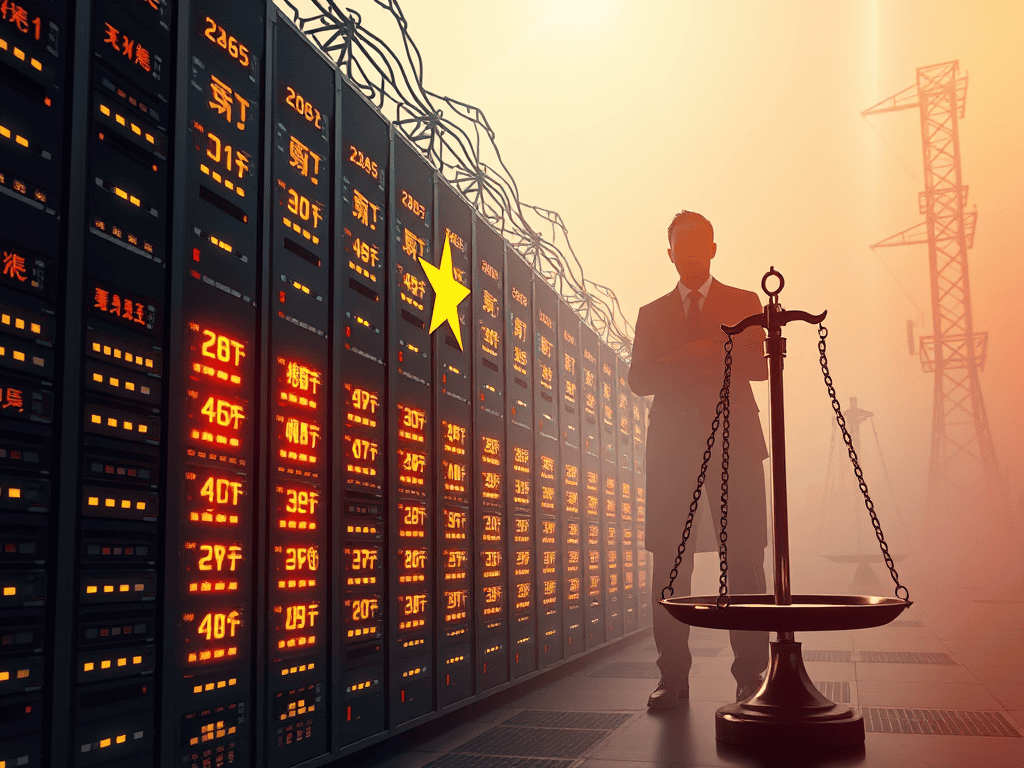
    A definitive structural intervention is unfolding across the Chinese industrial map. Beijing has begun slashing energy costs for its largest data centers. They are cutting electricity bills by up to 50 percent. This is to accelerate the production and deployment of domestic AI semiconductors.

    Targeting hyperscalers such as ByteDance, Alibaba, and Tencent, these grants are designed to sustain compute velocity despite U.S. export controls that bar access to frontier silicon.

    Mechanics—How Subsidies Rehearse Containment

    The 50 percent energy cuts operate as a containment rehearsal. Beijing lowers the operational cost floor. This ensures that its developer ecosystem maintains its momentum.

    • Cost-Curve Diplomacy: Subsidized power effectively attempts to reset the global benchmark for AI compute pricing. This forces Western firms to defend their margins in an environment where the energy-AI loop is tightening.
    • Developer Anchoring: Municipal and provincial incentives create a “gravity well” for talent. These incentives ensure that startups, inference labs, and cloud operators remain anchored within China’s sovereign stack.
    • The Scale Logic: Unlike the market-led surge seen in firms like Palantir, China’s AI expansion is subsidized by the government. This is done as a matter of national defense. It converts a commodity (electricity) into a strategic propellant for the silicon race.

    China is weaponizing its cost curve. By subsidizing the “oxygen” of the AI economy—energy—it is attempting to bypass the hardware bottlenecks imposed by the West.

    The Globalization Breach—Why Trust Wins Systems

    A decade ago, the globalization playbook was simple: low costs won markets. Today, that playbook has failed. In the AI era, trust wins systems.

    • The Manufacturing Trap: In the 2010s, China’s scale made it the gravitational center of supply chains. But AI is not labor-intensive; it is trust-intensive.
    • The Reliability Standard: Western nations are increasingly framing their technology policy around ethics, security, and institutional credibility. Legislation like the CHIPS Act and the EU AI Act has redefined market participation as conditional—access requires proof of reliability.
    • The Reputational Deficit: China’s own maneuvers include the Nexperia export-control retaliation. Opaque Intellectual Property (IP) rules are another factor. These actions have deepened a systemic trust deficit. Cheap power may illuminate a data center, but it cannot offset reputational entropy.

    Cost efficiency once conferred dominance, but credibility now determines inclusion. China’s cheap energy can sustain a domestic model, but it cannot buy the global interoperability required for AI leadership.

    The Ethics Layer—Abundance Without Interoperability

    Beijing’s energy subsidies may secure short-term velocity, but they cannot substitute for the governance frameworks that global firms demand.

    The primary barrier to China’s AI sovereignty is not silicon scarcity, but Institutional Opacity. Global developers remain wary of China-tethered stacks due to IP leakage risks. They are also concerned about forced localization clauses. Additionally, there is the lack of an independent judiciary.

    Real AI advancement requires Governance Interoperability:

    • Enforceable IP protection.
    • Transparent regulatory regimes.
    • Credible institutions that uphold contractual integrity.

    Without these, subsidies become “Symbolic Fuel”. They are abundant and powerful, but ultimately directionless. This occurs in a global market that values the rule of law over the price of a kilowatt.

    Rehearsal Logic—From Cost to Credibility

    In the AI era, cost is no longer the decisive variable; it is merely the entry fee. We are moving from an era of cost advantage to an era of Credible Orchestration.

    • Then: IP flexibility drove expansion. Now: IP enforceability defines legitimacy.
    • Then: Tech transfer was coerced. Now: Tech transfer must be consensual and audited.
    • Then: Governance sat on the sidelines. Now: Governance directs the entire play.

    Conclusion

    China’s subsidies codify speed but not stability. They rehearse domestic resilience yet fail to restore the confidence required to lead a global digital order.

    At this stage, the AI era remains suspended in an interregnum of partial sovereignties:

    • The United States commands model supremacy but lacks the cost discipline seen in its rivals.
    • China wields scale and speed but faces a debilitating trust deficit.
    • Europe codifies ethics and governance but trails significantly in compute and execution velocity.

    The decisive choreography—where trust, infrastructure, and innovation align—has yet to emerge. In this post-globalization landscape, reliability and orchestration outperform price. The age of cost advantage has ended. The era of credible orchestration has begun.

  • Palantir’s Ascent

    Palantir’s Ascent

    Palantir’s 2025 performance is not a standard market rebound; it is a structural revelation. In the third quarter of 2025, the firm reported revenue of 1.2 billion dollars—up 63 percent year-over-year—and a profit of 476 million dollars. In a single ninety-day window, Palantir outperformed its entire annual earnings from previous cycles.

    With the stock rising 170 percent year-to-date and the full-year outlook raised for three consecutive quarters, the numbers are undeniable. Yet, the numbers are merely the “settlement” of a much deeper truth. Palantir’s ascent confounds traditional analysts because it defies the growth logic of legacy Software-as-a-Service (SaaS). It is not selling a product; it is selling the choreography of survival for a fracturing world.

    Mechanics—The Stack Behind the Surge

    The surge was the result of a decade-long rehearsal. Palantir’s infrastructure is built as a series of interlocking nodes that form a “Choreography of Computational Trust.”

    • Gotham: Anchors the real-time defense decision systems for the U.S. and allied governments. It is the operating system for modern deterrence.
    • Foundry: Integrates fragmented enterprise data across healthcare, energy, and manufacturing. It transforms organizational chaos into operational coherence.
    • Apollo: Deploys AI across hybrid and classified environments, ensuring that intelligence remains continuous even when physical networks fracture.
    • MetaConstellation: Links satellites directly to algorithms. As analyzed in our Orbital Inference dispatch, this platform rehearses “Collapse Containment” through real-time inference at altitude.

    Profit, in this context, is the byproduct of orchestration. Palantir’s platforms are not isolated tools. They are the industrial spine of a new era. In this era, data must be converted into decision-velocity instantly.

    Narrative Inversion—The End of Deferred Recognition

    For nearly two decades, Palantir was dismissed by the mainstream as opaque, overhyped, or unscalable.

    Palantir was building for a world that did not yet exist. It anticipated a world of systemic shocks, broken supply chains, and high-intensity geopolitical friction. AI demand accelerated rapidly. The global order began to de-synchronize. Finally, the market caught up to the architecture Palantir had rehearsed in silence.

    Convergence is the ultimate catalyst. When the “Epoch” (volatility) meets the “Architecture” (resilience), valuation ceases to be speculative and becomes a reflection of structural necessity.

    The Macro Layer—The Sovereign Archetype

    Palantir now embodies the archetype of modern American capitalism: building trust through systems, not stories. Its rise mirrors a broader U.S. strategic shift.

    • Modularity vs. Orchestration: While China focuses on vertically integrated “Command Stacks,” the U.S. is countering with the high-velocity modularity demonstrated by firms like Palantir.
    • Developer Anchoring: Palantir has embedded its logic into the developer workflows of both the Pentagon and the Fortune 500. By doing so, it has created a “Sovereign Moat.” Traditional competitors cannot bridge this moat.
    • Geopolitical Alignment: Palantir’s breakout is the domestic reflection of the global alignment between AI compute and geopolitical power. It is the infrastructure of the U.S. strategic perimeter.

    The Investor Codex—Reading Intent, Not the Quarter

    To navigate the 2026 cycle, investors must evolve from spectators of earnings reports into interpreters of intent. The question is no longer “what is the firm earning?” but “what is the firm rehearsing?”

    How to Audit the New Infrastructure

    • Audit Rehearsal Velocity: Look for firms that have already built the “worst-case” infrastructure before the crisis arrives. The best investments are those building quietly for a future that is about to settle.
    • Systems Over Products: Prioritize companies building interlocking systems (like Palantir’s four platforms) rather than standalone products. Interdependence creates a lock-in that transcends price.
    • Trace the Fracture Resilience: Ask if the code scales when the world fractures. If a firm’s software requires a “perfect” global environment to function, it is a liability.
    • Track the Orchestration: The real moat is the ability to survive the next dislocation. Look for firms that provide the “oxygen” (inference, logistics, trust) required to keep a system alive during a collapse.

    Conclusion

    Palantir did not change; the world did. Gotham, Foundry, Apollo, and MetaConstellation were fully operational long before the market realized their value.

    In 2025, Palantir stopped being misunderstood. The world finally developed a requirement for the resilience it had already built. Profit is the proof of orchestration, and infrastructure is destiny.

  • The Orbital AI Race at Altitude

    The Orbital AI Race at Altitude

    The contest between the United States and China has transitioned into a new physical and digital layer. The focus is no longer merely on who reaches orbit or plants a flag. Instead, it is about who controls the compute, data, and developer ecosystems that run through the vacuum.

    Space has become a high-velocity interface for Artificial Intelligence (AI) deployment, model distribution, and collapse containment. In the 2025 landscape, the final frontier is being recoded as a programmable layer of the global AI economy.

    Infrastructure Contrast—Commercial Stack vs. Command Stack

    The architecture of orbital power reveals two fundamentally different scripts.

    The U.S. Commercial Stack (Decentralized Node Logic)

    U.S. orbital logic is decentralized, corporate, and Application Programming Interface (API)-driven.

    • Amazon’s Project Kuiper: It is planned as a constellation of 3,236 satellites. Kuiper links orbital hardware directly to Amazon Web Services (AWS) edge compute. This setup converts the vacuum into a data pipe for the cloud.
    • Microsoft Azure Space: It orchestrates Luxembourg-based SES and SpaceX constellations through AI APIs. This integration incorporates orbital data into the existing enterprise AI stack.
    • Palantir: Fuses satellite feeds into defense-grade decision platforms, translating capital and raw data into real-time battlefield inference.

    The Chinese Command Stack (Unified Orchestration)

    China’s response is centralized, command-based, and vertically synchronized.

    • The Unified Engine: The China Aerospace Science and Technology Corporation (CASC) operates under a unified sovereign mandate. Huawei, CETC, and DeepSeek also operate under this mandate.
    • The Guowang Initiative is China’s answer to Starlink. It is a planned 13,000-satellite constellation. It is designed as a single-state orbital stack. This stack fuses AI models, navigation (BeiDou), and defense telemetry.
    • Vertical Integration: Unlike the U.S. model, where companies compete for contracts. China builds a coherent stack from the chip to the constellation. This approach ensures that AI doctrine is hard-coded into the hardware.

    The U.S. codifies velocity through a bazaar of commercial nodes. China codifies control through a cathedral of command. Both sides now treat orbit as the physical substrate for “Inference at Altitude.”

    The Strategic Comparison—The Stacked Ledger

    While the U.S. leads in sheer volume and model supremacy, China’s strength lies in its ability to synchronize its infrastructure.

    • U.S. Alliance Advantage: The U.S. can out-scale China through its alliance network (NASA, ESA, JAXA) and its dominant commercial players. Starlink already operates over 6,000 satellites, providing a massive, battle-tested head start in orbital liquidity.
    • China’s Integration Edge: China counters with orchestration. The BeiDou navigation system has over 30 current-generation satellites. It offers 100% global coverage. The system is natively integrated into China’s maritime and industrial hardware.
    • Developer Anchoring: The U.S. leads in “Developer Sovereignty.” By exporting APIs as infrastructure, firms like Microsoft and Amazon anchor the global developer class to Western rails.

    AI-Native Orbital Logic—Inference at Altitude

    The companies that command the 2026 cycle are those embedding AI inference directly into the orbital “rail.”

    • On-Orbit Compute: The shift is from “Bent-Pipe” satellites (which merely relay data) to “Edge-Compute” satellites (which process data in orbit). This reduces latency and allows for real-time AI reasoning for autonomous systems and defense.
    • Sovereign Cloud Expansion: Huawei Cloud and CETC are merging orbital imaging with DeepSeek’s reasoning models. They are offering “Sovereign Intelligence” to partners in the Global South.
    • The API War: Microsoft and Amazon are striving to ensure compatibility for every satellite launched by an ally. These satellites must be “Azure-ready” or “AWS-native.” This locks the orbital layer into the U.S. software perimeter.

    Orbital Diplomacy—The Global South as the Stage

    Both superpowers are using orbit to export trust and dependency to emerging markets.

    • China’s Infrastructure Diplomacy: Through the Belt and Road Initiative, China offers partners satellite internet, climate imaging, and dual-use communications. It is a “Space-as-a-Service” model designed to bypass Western terrestrial cables.
    • The U.S. Soft Power Rail: The U.S. counters through corporate deployment. Starlink’s wartime utility in Ukraine demonstrates its strategic value. AWS’s humanitarian compute initiatives showcase its role in global efforts. These actions are rehearsals for a new era of “Digital Humanitarianism.” This era anchors nations to the U.S. commercial stack.

    Conclusion

    The orbital race is not a speculative vanity project; it is the construction of a permanent, high-altitude infrastructure.

    In this choreography, the nation that anchors developers—not just satellites—will define the logic of space. The U.S. relies on the speed of its commercial giants. This velocity sets the standard. Meanwhile, China uses the integration of its command stack. This integration enforces its doctrine.