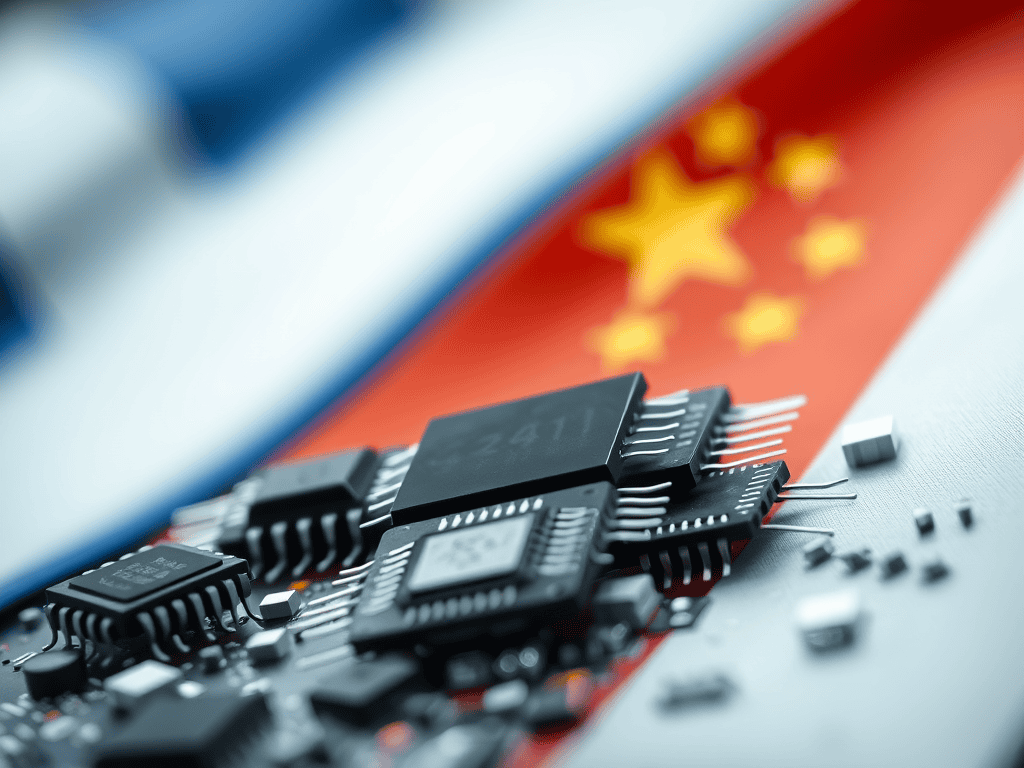
A definitive structural conflict has emerged at the base of the global industrial pyramid. Netherlands-based chipmaker Nexperia NV is currently at the center of a geopolitical standoff.
In October 2025, the Dutch government executed a seizure of the firm’s domestic operations. They acted due to national security concerns over Nexperia’s Chinese owner, Wingtech Technology. China immediately retaliated by blocking Nexperia products from leaving its borders. It threatens the production lines of the world’s largest automakers. The chips at stake are not AI accelerators or high-end GPUs. They are the essential power-management components that govern the basic functions of modern machinery.
From Industrial Fabric to Geopolitical Fabric
Nexperia is not a peripheral supplier; it is a critical node in the global assembly line. The company produces billions of foundational chips annually—transistors, diodes, and power-management modules. It fabricates these in Europe and performs assembly and testing in China.
With annual sales of roughly 2 billion dollars, Nexperia provides the “connective tissue” for global manufacturing. When China curbed its exports, Volkswagen AG, Nissan Motor Co., and Mercedes-Benz Group AG sounded immediate alarms. The incident reveals a hard truth: in a fragmented world, the smallest components command the largest geopolitical consequences.
Mechanics—How the Weaponization Played Out
The standoff was executed through a choreography of Cold War-era tactics applied to modern technology.
- The Dutch Seizure: The government invoked national security statutes to wrest control from Wingtech. They feared that critical intellectual property could be transferred to Chinese state entities.
- The Chinese Retaliation: Beijing responded by imposing export controls on Nexperia products assembled or tested within its borders. This effectively halted the supply of components. These components permeate every layer of a modern vehicle—from airbags and sensors to infotainment and braking systems.
Implications—China’s Performance of Vulnerability
China’s retaliation was intended to be a show of force. However, it effectively codified the fragility of its own industrial base.
By weaponizing essential components, China has signaled a deep unpredictability to global manufacturers. Developers and industrial leaders—already navigating U.S.-led export controls—now perceive a permanent “risk premium” attached to any supply chain tethered to China. This move endorses the West’s “Silicon Sovereignty” agenda. It encourages manufacturers to anchor their ecosystems in jurisdictions with stable governance. These are places with predictable enforcement.
The Investor and Industrial Codex
In this era of fragmented liquidity and sovereign friction, investors and industrial leaders face significant challenges. They must adopt a new forensic audit of their supply chains.
The Access Audit for Foundational Hardware
- Audit the Ownership Structure: Trace the ultimate parent companies of your component suppliers. Does the ownership align with the jurisdiction of your primary market?
- Map the Assembly Gap. Identify foundational components fabricated in the West. These components are “finished” (tested or assembled) in high-friction jurisdictions. This gap is the primary site of potential export bans.
- Price the Sovereign Tail Risk: Even commodity-grade chips now carry sovereign risk. Resilience is no longer a derivative of scale—it is a derivative of governance and political alignment.
Conclusion
The move against Nexperia was staged as a tactical assertion, but it performed as a systemic warning. It proved that industrial production and AI deployment are converging. They face a single physical constraint: the reliability of the supply rail.
The question for both states and firms is no longer “who can build the chip?” but “who can guarantee it will keep shipping?” As foundational components become geopolitical currency, the competitive moat of the future will be built on trust and continuity. It will also depend on the ability to operate outside the reach of sovereign retaliation.
Further reading: