Tag: Compute Sovereignty

  • Auditing the Three Tiers of the Data Cathedral

    The Brief

    • The Thesis: In 2026, national power is measured by “Compute Sovereignty.” The Forensic Signal: The “Digital Leverage Gap”—the distance between a nation’s data consumption and its physical ownership of the hardware.
    • The Discovery: A four-tier system that separates the “Sovereigns” from the “Disenfranchised.”

    Investor Takeaways

    • Structural Signal: The “Digital Leverage Gap.” Investors must distinguish between nations that own the “Full Stack” (Sovereigns) and those that merely host the “Warehouse” (Tenants).
    • Systemic Exposure: The “Consumption Sink.” Tier 3 nations (Tenants and Outsiders) pay for the privilege of hosting foreign intelligence, creating a massive wealth transfer toward Tier 1 and Tier 2 nations.
    • Narrative Risk: The “Residency Deception.” Many Tier 3A nations believe they are achieving independence by building local data centers. In reality, they own only the “concrete and electricity,” while the intelligence (chips and code) remains 100% foreign-owned.
    • The “Digital Switzerland” Model. Tier 2 nations (Hubs like Ireland, UAE, and Singapore) have carved out a unique position by trading domestic energy and land for foreign capital.
    • Track “Full Stack” Ownership: Focus on Tier 1 (U.S. and China) as the only regions with total sovereignty over both the “Brain” (Models) and the “Body” (Hardware).

    Full Article

    The New Geopolitics of Compute

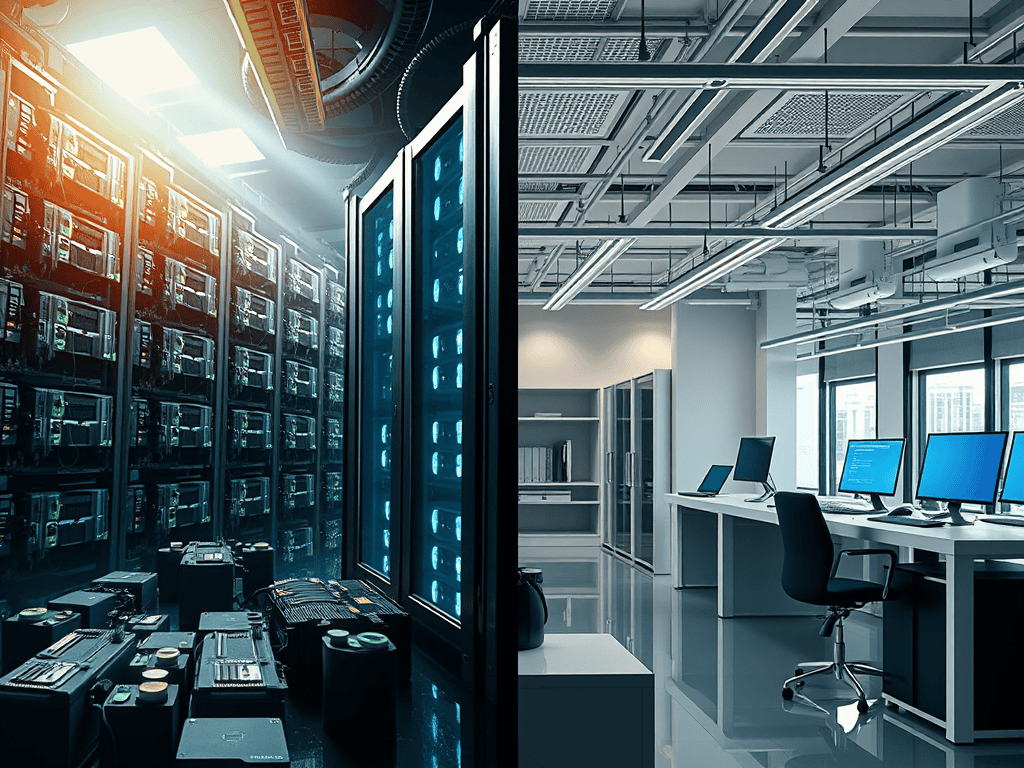
    The $1.05 Trillion Data Cathedral is not a global utility; it is a Fortress. While the 7-part audit (links below) revealed the cost of the build-out, this risk map reveals the consequences for those left outside the walls.

    Tier 1: The Sovereigns (The Fortress)

    • Primary Players: United States, China.
    • Profile: Total ownership of the “Full Stack”—from the $250B Silicon layer to the $150B Power Rail.
    • Sovereignty Status: Total. They own the “Brain” (Model) and the “Body” (Hardware).

    Tier 2: The Hubs (The Service Providers)

    • Primary Players: Ireland, Singapore, UAE, Netherlands.
    • Profile: The “Digital Switzerland.” They trade domestic energy and land for foreign capital.
    • Sovereignty Status: Conditional. They can pull the plug, but they can’t run the machine alone.

    Tier 3A: The Tenants (The Warehousers)

    • Profile: Nations that build data centers purely for “Data Residency” (storing local data onshore).
    • The Deception: Governments tell their citizens they are “Becoming Tech Hubs.” In reality, it’s just a high-tech parking lot. They have zero equity in the AI frontier. The intelligence (the chips/code) is 100% foreign.
    • Sovereignty Status: Symbolic. They may own the warehouse, but the goods inside belong to someone else.

    Tier 3B: The Outsiders (The Dependents)

    • Profile: Nations with zero domestic data center capacity. They represent the “Digital Disenfranchised.”
    • The Forensic Reality: These nations have no digital buffer. Every government record, bank transaction, and AI query travels across oceans to a Tier 2 hub. They are entirely dependent on foreign “Digital Life Support.”
    • Sovereignty Status: Nil. In a geopolitical crisis, they can be erased from the digital map with a single “Off-Switch.”

    Conclusion

    The Data Cathedral is creating an invisible partition. While Tier 1 nations build wealth and Tier 2 nations build infrastructure, the Tier 3 groups are caught in a “Consumption Sink.”

    The Map is shifting. Are you a Sovereign, a Hub, or a Tenant?

    Readers who want to read our Data Cathedral series, may click the following links:

  • Scarcity vs. Efficiency — The Real Battle Behind the Nvidia Risk

    Scarcity vs. Efficiency — The Real Battle Behind the Nvidia Risk

    The AI Market Is Too Focused on Scarcity

    The narrative driving Nvidia’s valuation is simple: AI compute is scarce, hyperscalers need chips, and training demand is infinite. But this story contains a silent expiry date. Scarcity explains the present, not the future. What depresses chip demand isn’t the collapse of AI, but the pivot from brute-force scaling toward model efficiency. Google’s Gemini 3 doesn’t threaten Nvidia because it is “better.” It threatens Nvidia because it makes compute cheaper. The first shock of AI was hardware shortage. The second shock will be hardware redundancy.

    Efficiency Becomes a Weapon

    Nvidia’s power is built on scarcity. This includes supply bottlenecks, High-Bandwidth Memory (HBM) constraints, and advanced packaging choke points. There are also Graphics Processing Unit (GPU) allocation hierarchies that feel like energy rationing. But software is eroding that power. If hyperscalers can train more with less—using algorithmic optimization, sparsity, distillation, quantization, pruning, and custom silicon—scarcity becomes less valuable. The moment Google, Microsoft, Amazon, or Meta succeed in delivering frontier-level models with fewer GPUs, Nvidia’s pricing power weakens. This happens without losing a single sale. The threat isn’t competition—it’s substitution through optimization.

    Google’s Tensor Processing Units (TPU) Gambit — Vertical Efficiency as a Hedge

    Gemini is not just a model; it is a justification to scale TPUs. If Google can prove frontier training runs cheaper and faster on TPUs, it does not need to cut Nvidia out. It merely needs to reduce dependency. Reducing dependency is enough to cause multiple compression. Nvidia’s risk is not that TPUs dominate the market, but that they function as strategic leverage in procurement negotiations. Scarcity loses its pricing power when buyers can walk away.

    Investor Mispricing

    When efficiency gains shift workloads from brute-force training to compute-thrifty architectures, scarcity demand fades. Nvidia’s valuation hinges on scarcity demand behaving like structural demand. That is the mispricing.

    Efficiency Does Not Kill Nvidia — It Reprices It

    The market is framing AI as a GPU supercycle. But if the industry pivots toward efficiency, Nvidia remains essential—but not as irreplaceable choke point. Scarcity creates monopoly pricing. Efficiency forces normal pricing. Nvidia’s future isn’t collapse—it’s normalization.

    Conclusion

    The real battle in AI is not between Nvidia and Google, but between scarcity and efficiency. Scarcity governs the present; efficiency governs the trajectory. TPUs, software optimization, and algorithmic thrift are not anti-GPU—they are anti-scarcity. Investors don’t need to predict which architecture wins the stack. They only need to understand the choreography: scarcity spikes valuations; efficiency takes the crown. The AI trade will not die when GPUs become abundant. It will simply stop paying a scarcity premium. Nvidia is not at risk of collapse—it is at risk of normalization.