Tag: Data Centers

  • AI Infrastructure Under Fire

    Summary

    • Drone strikes on AWS Gulf facilities forced AI infrastructure debt to reprice from par (99¢) to 88–92¢, with Gulf spreads widening 250–400 basis points and insurance premiums spiking 300%.
    • Simultaneous zone breaches exposed the fragility of “digital redundancy.” Software failover could not replace destroyed cooling and power systems, revealing systemic vulnerability.
    • $283B in global data center construction faces gating. Banks hit concentration limits in the Gulf, demanding sovereign guarantees, while helium and energy disruptions shrink Debt Service Coverage Ratio (DSCR) across AI hardware.
    • Data centers are now treated as strategic national assets, comparable to oil pipelines. The 94‑cent benchmark has migrated from SaaS into the physical hardware layer, forcing geopolitical audits of every data cathedral.

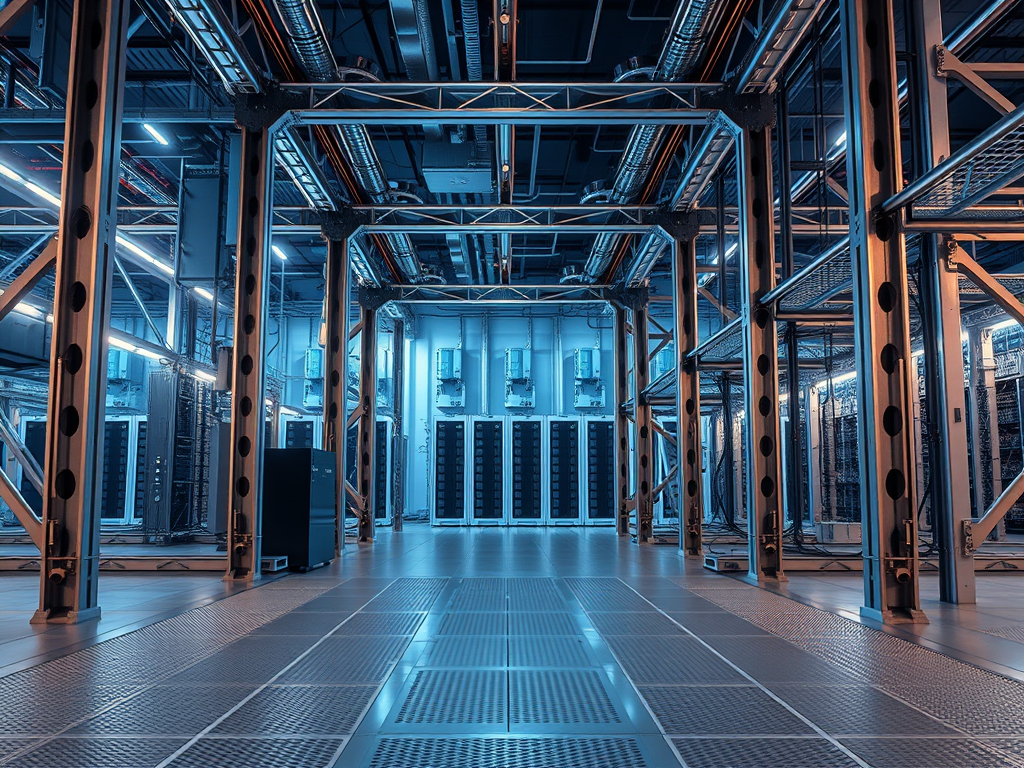
    In April 2026, the illusion of AI infrastructure as untouchable “digital real estate” was shattered. Drone strikes by Iran’s Islamic Revolutionary Guard Corps (IRGC) on AWS facilities in the UAE and Bahrain exposed the physical fragility of the cloud, forcing debt markets to reprice data centers not as neutral cathedrals of computation but as kinetic utilities vulnerable to the same geopolitical shocks as oil pipelines. What had been treated as par‑valued, sovereign‑like assets suddenly carried war‑risk discounts, insurance spikes, and liquidity freezes — signaling the end of “neutral infrastructure” and the beginning of a geopolitical audit of every data cathedral.

    Repricing Shock

    • Pre‑Strike Valuation: AI infrastructure debt traded near par (99.7¢).
    • Post‑Strike Reality: Gulf spreads widened 250–400 basis points in 14 days. Debt concentrated in the UAE and Bahrain is now marked down to 88–92¢.
    • Insurance Trigger: Reinsurers (Allianz, AXA) reclassified hyperscale data centers as Tier‑1 strategic infrastructure. Insurance premiums spiked 300%, eroding NOI and debt service capacity.

    Failure of Digital Redundancy

    • Zone Breach: IRGC drones hit two of three AWS availability zones in the UAE simultaneously, breaking the assumption of regional redundancy.
    • Systemic Fragility: Destroyed cooling and power systems proved software failover cannot compensate for physical loss.
    • Investor Realization: “Digital redundancy” is a fiction if the physical cathedral sits in a strike zone.

    Asset‑Backed Migration and Liquidity Freeze

    • Concentration Gating: Banks (HSBC, Barclays) hit lending limits for Gulf projects, demanding sovereign guarantees for new builds.
    • Helium & Energy Tax: Strait of Hormuz disruptions spiked helium and energy costs, shrinking DSCR across AI hardware supply chains.
    • Global Build‑Out Freeze: $283B in planned data center construction faces liquidity constraints in conflict‑adjacent regions.

    Comparative Valuations

    • Middle East Hyperscale Debt
      • Pre‑strike valuation: 99¢ (par)
      • Current “kinetic” mark: 88¢–92¢
      • Driver: Physical vulnerability & insurance spike
    • US/EU Sovereign AI Debt
      • Pre‑strike valuation: 99¢ (par)
      • Current mark: 101¢ (premium)
      • Driver: Flight to safety in “hardened” jurisdictions
    • GPU‑as‑a‑Service Debt
      • Pre‑strike valuation: 94¢ (disrupted)
      • Current mark: 85¢–89¢
      • Driver: Supply chain friction (helium/energy costs)
    • Data Center ABS (Asset‑Backed Securities)
      • Pre‑strike valuation: 99.5¢
      • Current mark: 94¢
      • Driver: Gating risk from single‑region concentration

    Conclusion

    The April strikes ended the illusion of “neutral” infrastructure. AI data centers are now treated like oil pipelines or power grids — strategic national assets subject to kinetic risk. For private credit investors, the 94‑cent benchmark has migrated from SaaS into the physical hardware layer. Every data cathedral now requires a geopolitical audit: if it’s above ground in a contested region, it’s no longer a safe bond — it’s a kinetic liability.

  • The New Private Credit Collaterals: From Code to Copper

    Summary

    • Portfolios repriced to 94 cents, exposing fragility of code‑only collateral.
    • Data centers attract billions in senior debt, backed by scarce power and minerals.
    • Blackstone, Blue Owl, and Equinix/GIC dominate the new utility sector.
    • AI isn’t just software — it’s a global build‑out of copper, cooling, and concrete.

    By March 2026, the private credit story has shifted from intangible “Code” to tangible “Copper.” Software‑only portfolios are being gated or repriced to 94 cents, while physical infrastructure — the global network of data centers — is attracting hundreds of billions in senior debt and permanent capital. This “Data Cathedral” is no longer just a metaphor; it is the heavy industrial reality consuming global capital, reshaping credit markets, and redefining sovereignty in the age of AI.

    The Narrative Shift

    • March 15, 2026: Software‑only portfolios are being gated or repriced to 94 cents.
    • Physical Infrastructure (“Copper”): Data centers have become the new cathedral of capital, attracting hundreds of billions in senior debt and permanent capital.
    • Why: Scarcity of power and copper makes physical assets more defensible than intangible code.

    The Big Three Infrastructure Managers

    • Blackstone – QTS Data Centers
      • Investment: $92B+ development pipeline
      • Role: The Master Builder — controls ~50% of private wealth infrastructure revenue
    • Blue Owl – Digital Infrastructure Trust
      • Investment: $27B “Hyperion” JV with Meta
      • Role: The Hyperscale Partner — provides debt rails for Meta and Amazon
    • Equinix / GIC – xScale Portfolio
      • Investment: $8B+ global joint venture
      • Role: The Global Bridge — connects Seoul, Sydney, and Paris to the AI core

    Why Copper Wins in 2026

    • Power Wall: Northern Virginia demand hit 4,900 MW this month; Dominion Energy proposing rate hikes.
    • Copper Constraint: Added to U.S. “Critical Minerals” list in late 2025. Data centers now compete with EVs and defense for refined copper.
    • Credit Result: Lenders pivot from cash‑flow loans (Code) to asset‑backed securitization (Copper). If borrowers fail, lenders own substations and fiber — assets nearly impossible to replicate.

    Live 2026 Examples & Locations

    • Hyperion Campus (Richland Parish, Louisiana)
      • Players: Blue Owl Capital (80%) and Meta (20%)
      • Money: $27B total development costs
      • Signal: Build‑to‑suit project with Meta guaranteeing residual value for 16 years. Seen by private credit investors (including PIMCO) as safer than U.S. Treasuries because the “Digital Cathedral” is mission‑critical to Meta’s survival.
    • Britishvolt Mega‑Campus (Northumberland, UK)
      • Players: Blackstone (QTS)
      • Money: 1.1 GW campus projected to cost billions
      • Signal: Repurposing a failed battery factory site into AI compute. Infrastructure Cannibalism — converting failed green‑energy sites into AI power hubs.
    • APAC Frontier (Seoul & Southeast Asia)
      • Players: Gaw Capital and Equinix (with GIC)
      • Money: Gaw Capital’s “Infinaxis” platform and Equinix’s $525M Seoul JV
      • Signal: Sovereignty shifting East. Projects use liquid cooling (twice as efficient as air) to bypass tropical heat constraints, positioning Southeast Asia as a competitive hub for kinetic compute.

    Follow the Money: The 2026 Securitization Wave

    • 2025 Surge:
      • International project finance for data centers increased by $30B.
      • Greenfield investment rose by $125B.
    • Narrative vs. Truth:
      • Narrative: “AI is a software revolution.”
      • Truth: “AI is a capital‑intensive utility build‑out.”
    • Investor Play:
      • Private credit funds are increasingly “slicing” deals.
      • Example: Senior secured loan at 9% interest, backed by copper and cooling systems of a campus in Eemshaven, Netherlands (QTS invested $1.5B).

    Investor Takeaways

    • Copper Sovereignty: Physical infrastructure is the new anchor of private credit.
    • Scarcity Premium: Power and copper constraints drive value.
    • Global Bridges: APAC projects show sovereignty shifting east.
    • Capital Truth: AI’s future is not just code — it’s copper, cooling, and concrete.

  • The New Private Credit Collaterals: Data Centers, Asia‑Pacific Rails, and Agentic AI

    Summary

    • Data Centers Ascend: By March 2026, $30B securitized data centers became the safe‑haven collateral, replacing fragile software loans.
    • APAC Rails Surge: Private credit issuance in Asia‑Pacific is projected to rise from $59B (2024) to $92B (2027), led by India, Australia, and Japan.
    • Agentic AI Risk: Autonomous AI now drives due diligence, analyzing 10,000+ datapoints per borrower — but raises contagion risk if models converge.
    • Digital Mobility Reflex: Tokenized loans trade via “Digital Embassies” in Singapore and Dubai, promising liquidity but risking faster breaches of the 94‑cent benchmark.

    By March 2026, private credit managers are fleeing fragile software loans and searching for safer ground. Data centers, APAC issuance, and agentic AI have emerged as the new pillars of collaterals — but each carries its own risks and reflexes.

    The Rise of Data Centers as Collateral

    • Late 2025: Global data center securitization volumes tripled to $30B.
    • March 2026: Data centers have become the “Safe Haven” collateral for private credit managers fleeing the collapsing 94‑cent software benchmark.
    • Why it matters: Unlike software loans, data centers are tangible, revenue‑generating infrastructure with long‑term contracts — making them more resilient in stress cycles.

    Asia-Pacific’s Private Credit Growth Cycle

    • U.S. & Europe: Saturated markets, facing 5%+ true default rates.
    • Asia‑Pacific (APAC): Entering a multi‑year growth cycle.
      • Issuance projected to rise from $59B in 2024 to nearly $92B by 2027.
      • Growth led by India, Australia, and Japan.
    • Challenge: Each of the 50+ APAC jurisdictions has its own “Sovereign Rail” — local laws and currencies vs. global USD‑denominated rails.
    • Implication: Managers must navigate fragmented legal frameworks while chasing growth.

    Agentic AI: The New Due Diligence Weapon

    • Beyond chatbots: Agentic AI refers to autonomous systems that perform due diligence.
    • By late 2026: 40% of enterprise software expected to embed agentic AI capabilities.
    • Private lenders: Now analyzing 10,000+ data points per borrower (vs. ~100 in traditional scoring).
    • Truth Angle: If the “Agent” makes the credit decision, who owns the risk?
      • Risk of algorithmic contagion: multiple lenders using the same AI model could trigger simultaneous exits from 94‑cent positions.

    From Minted to Mobile: Digital Embassies

    • 2026 Shift: Assets move from “Minted” (proof of concept) to “Mobile” (active trading).
    • Examples: U.S. Treasuries and private loans now trade across Digital Embassies — regulated hubs in Singapore and Dubai.
    • Liquidity Reflex: Tokenizing private loans aims to solve the DPI (Distributed to Paid‑In) crisis.
    • Critical Question: Does tokenization create real liquidity, or just accelerate breaches of the 94‑cent benchmark?

    Investor Takeaways

    • Data Centers: Emerging as the most sought‑after collateral in 2026.
    • APAC Growth: Attractive issuance, but fragmented legal rails demand caution.
    • Agentic AI: Powerful for due diligence, but raises systemic risk if models converge.
    • Digital Mobility: Tokenization may improve tradability, but liquidity illusions remain — speed does not equal solvency.

    To explore how private credit is shifting from intangible “Code” portfolios to tangible “Copper” infrastructure, please read The New Private Credit Collaterals: From Code to Copper.

    To explore how agentic AI is reshaping private credit risk, please read Who Owns the Risk When the Human Leaves the Loop?

    To explore how courts and regulators are redrawing liability in the agentic AI era, please read Who Owns the Risk of Agentic AI?

    To explore how liability frameworks diverge across jurisdictions, see AI Liability Across Jurisdictions: EU vs U.S.— where Europe’s product‑safety model collides with America’s agency‑law approach, exposing funds to regulatory paralysis in London and litigation contagion in New York.

    To see how insurers have quietly become the stealth backers of private credit’s fragile floor, read How Insurers Became the Stealth Backers of Private Credit’s Fragile Floor — where Rated Note Feeders turn risky loans into “safe” notes and regulators are beginning to push back.

    For a deeper look at how insurers repackage risky loans into “safe” notes, see How Insurers Turn Risky Loans Into ‘Safe’ Notes — where Rated Note Feeders reshape capital charges under Solvency II and expose hidden leverage across balance sheets.

    For an inside look at how the world’s “ultimate backstop” has become its most fragile lever, see The Reinsurance Trap — where asset‑intensive reinsurance, offshore affiliates, and private credit exposures reveal systemic vulnerabilities.

    For insight into how distressed capital exploits mid‑market software debt, see The ’94-Cent Slide’ in Mid-Market Software — where equity buyouts, recapitalizations, and loan‑to‑own plays reshape the sector under systemic pressure.

    For the collapse of semi‑liquid private credit, see Why Blue Owl and KKR’s Redemption Caps End the Retail Illusion — where gated exits, activist discounts, and SaaS‑pocalypse exposure reveal retail investors as exit liquidity in the Great Reset.

    For practical steps retail and high‑net‑worth investors can take to challenge mis‑selling and claw back fees, see How Investors Can Fight Back Against Hefty Private Capital Fees.

  • The $185B Sovereign Bet: Google’s Spending Shock

    Summary

    • Revenue Surge & Profit Growth: Alphabet’s revenue crossed $400 billion with net income up 30% to $34.5 billion, showing core engines (Ads and Cloud) remain highly profitable.
    • The Spending Shock: Google’s $185 billion AI capex forecast for 2026 is nearly five times net income — a manifesto for compute sovereignty, not a budget line.
    • Competitive Lens: Microsoft, Google’s closest rival, must decide whether to match this spending shock or position itself as the disciplined alternative, defining the AI infrastructure frontier.
    • Investor Takeaway: Margin expansion is dead as a primary metric. Google is trading short‑term efficiency for long‑term sovereignty, aiming to become the Central Bank of Intelligence.

    Alphabet’s annual revenue has officially crossed the $400 billion mark. Net income rose nearly 30% to $34.5 billion, proving that Google’s core engines — Ads and Cloud — are not just surviving; they are funding the war for AI sovereignty. The advertising machine and cloud contracts are underwriting the $185B build‑out of data centers and TPU silicon — the infrastructure war that decides who owns the compute layer of the global economy.

    Analytical Takeaways

    • Capex dwarfs net income — nearly five times larger — raising questions about margin sustainability.
    • Profits are rising in tandem with revenue, showing efficiency in Google’s core businesses.
    • Investor tension is visible: shares dipped ~6% on the announcement, reflecting unease about infrastructure war spending without a clear ROI horizon.
    • Strategic bet: Google is deliberately trading short‑term margin expansion for long‑term Compute Sovereignty.
    • Competitive lens: Microsoft, Google’s closest rival, must now decide whether to match the spending shock or position itself as the disciplined alternative. Either way, the duopoly is defining the frontier.

    The Spending Shock

    Google just reset the scoreboard. A $185 billion capex forecast for 2026 isn’t a budget; it’s a manifesto. This scale of investment — data centers, custom TPU silicon, and generative AI platforms — is the Data Cathedral in physical form, a build‑out rivaling national power grids.

    The math is stark: capex is now nearly 5x net income. Google is outspending Microsoft and Meta in absolute infrastructure terms, positioning itself as the pace‑setter in the AI sovereignty race.

    Investor Takeaway

    We are witnessing the death of “margin expansion” as a primary metric. Alphabet is deliberately sacrificing short‑term efficiency to secure Compute Sovereignty.

    The risk is immediate: Wall Street recoils at infrastructure wars without a clear ROI horizon, preferring margin discipline to sovereignty bets. Yet the truth is unavoidable — in 2026, the company that owns the most compute wins the right to tax the global economy. Google isn’t spending to stay relevant; they are spending to become the Central Bank of Intelligence.

    Subscribe to Truth Cartographer — because here we map the borders of power, the engines of capital, and the infrastructures of the future.

    Further reading:

  • The $350B Land Grab: Auditing the Data Cathedral’s Foundations

    Summary

    • Land + Power: The true bottleneck of AI’s $1T build‑out.
    • Digital Realty: 3.0GW pipeline makes it the backbone of AI real estate.
    • Iron Mountain: Underground assets give it a low‑cost edge.
    • Quanta & AECOM: Grid‑keepers and integrators turning capital into systemic infrastructure.

    Valuing AI Data Center Real Estate

    In the Data Cathedral, yield gaps matter — the difference between what firms own today and what’s still in the pipeline.

    Digital Realty (DLR): The 3.0 Gigawatt Giant

    • MW Backlog: 3,000 MW pipeline; $500M in annualized GAAP rent signed but not yet commenced.
    • Arbitrage: Nearly 20% of current revenue is “waiting to go live.”
    • Signal: $7B joint venture with Blackstone — proof that investors aren’t betting on buildings, but on scarce power‑ready land.

    Why it matters: Digital Realty’s backlog is a cash‑flow rocket once those megawatts switch on.

    Iron Mountain (IRM): The Underground Alpha

    • MW Backlog: Projected to hit ~700MW+ capacity.
    • Arbitrage: Retrofitting underground vaults — faster, cheaper, naturally cooler.
    • Signal: Superior Power Utilization Effectiveness (PUE) thanks to subterranean assets.

    Why it matters: Iron Mountain is a low‑cost operator disguised as a legacy storage firm, turning caves into AI vaults.

    The Architects of the Cathedral

    If REITs are the landlords, these firms are the industrial alchemists — converting $350B of capital into infrastructure.

    1. Quanta Services (PWR): The Grid‑Keepers

    • Signal: $30B+ backlog.
    • Alpha: Builds “substations‑in‑a‑box” to connect 500MW sites without destabilizing grids.
    • Windfall: As hyperscalers (Amazon, Google) move toward on‑site generation, Quanta becomes indispensable as Grid‑as‑a‑Service.

    Why it matters: Without Quanta, the Cathedral can’t plug into the grid.

    2. AECOM (ACM): The Hyperscale Blueprint

    • Signal: Paid to design liquid‑cooling facilities years before construction.
    • Alpha: Integrates HVAC, water‑cooling, and rack density.
    • Windfall: Operates on cost‑plus contracts — margins expand as complexity rises.

    Why it matters: AECOM profits from scale and complexity, making them the systemic integrators of the Cathedral.

    Conclusion

    The $350B land grab is the foundation of AI’s $1 trillion build‑out.

    • Land without power is worthless.
    • Megawatts, not square feet, define value.
    • REITs and infrastructure firms are the architects of AI’s industrial future.

    The Data Cathedral is not about buildings — it’s about energy‑secure fortresses. Investors who audit the backlog, not the hype, will see where the real moat lies.

    This is Part 1 of 7. Over the coming days, we will audit the remaining $650 Billion in capital flow—from the “Power Rail” to the “Resilience Layer.”

    Note: This $350 billion allocation represents the estimated global expenditure for AI data center real estate through 2027. Our forensic ledger focuses on US-listed REITs and engineering firms, which currently represent the most liquid and advanced segment of this asset class. As the “Data Cathedral” is a global race, investors should utilize the ‘Megawatt Backlog’ metric to audit comparable players in international hubs such as Frankfurt, Singapore, and London.

    This analysis is part of our cornerstone series on the Data Cathedral. See the full cornerstone article: The $1 Trillion Data Cathedral.


  • The $1 Trillion Data Cathedral: Infrastructure for AI’s Future

    Summary

    • $1 Trillion Build‑Out: AI infrastructure rivals the scale of the U.S. Interstate Highway System.
    • Industrial Backbone: Construction, semiconductors, and energy dominate allocations.
    • Hidden Winners: Cooling, backup power, and networking firms thrive alongside chipmakers.
    • Code to Concrete: The capital‑light startup era is over; infrastructure defines AI’s future.

    The $1 Trillion Bet

    The digital world is undergoing a massive physical makeover. PwC projects $1 trillion in global data center spending by 2027 — equal to the inflation‑adjusted cost of the U.S. Interstate Highway System.

    Instead of roads and bridges, this money is building the Data Cathedral — the industrial backbone of Artificial Intelligence.

    Why it matters: AI is no longer “lightweight.” The winners will be those who own the most steel, power, and silicon.

    The Massive Scale of the Data Cathedral

    AI is energy‑hungry and heat‑intensive. Running a single advanced query can use 10x the electricity of a standard search.

    • Land Grab: Construction and real estate dominate. Digital Realty, Equinix, and NTT Data race to secure land near water and power lines.
    • Power Problem: Utilities like NextEra, Duke Energy, and Enel supply massive electricity loads, integrating renewables to stabilize grids.
    • Hardware Race: Nvidia, AMD, Intel, and Micron scale GPUs and memory chips to meet unprecedented demand.

    Why it matters: Scaling AI requires industrial‑scale infrastructure, not just clever code.

    Beyond the Chips: The Hidden Winners

    While Nvidia grabs headlines, other industries are quietly thriving:

    • Power Guards: Cummins, Caterpillar, Generac, ABB supply backup generators to bypass strained grids.
    • Cooling Experts: Schneider Electric, Johnson Controls, Vertiv master liquid cooling and HVAC systems.
    • Networking Spine: Cisco, Huawei, Juniper provide fiber, switches, and routers for global AI training.
    • Financial Engines: Eaton and Blackstone Infrastructure fund and equip systemic scaling.

    Why it matters: Without power and cooling, data centers are just warehouses. Infrastructure resilience is the true value driver.

    The Strategy: The End of “Cheap” Tech

    For two decades, tech was high‑margin and capital‑light. That era is over.

    • New Landlords: AWS, Microsoft Azure, and Google Cloud spend tens of billions annually to scale infrastructure.
    • Infrastructure is Destiny: Regions with land and power become new centers of wealth.
    • Velocity Wins: Speed of construction is now a competitive advantage in the AI arms race.

    We are moving from “Code to Concrete.” The next decade will be defined by who controls the largest physical footprint.

    Conclusion

    The $1 trillion projection for 2027 is a wake‑up call. AI is no longer just software — it’s an industrial project reshaping global economics.

    The Data Cathedral is the new factory. For investors and citizens alike, the takeaway is clear: AI’s future is being built in steel, silicon, and gigawatts.

    In the coming days, we will be conducting a forensic audit of each sector in the Cathedral, starting with Construction and Real Estate.

    Note: While the $1 trillion projection represents a global capital shift, the United States is expected to absorb a commanding 40% to 50% share of this infrastructure build-out. The frameworks and systemic signals identified in this analysis serve as a global blueprint; however, the specific companies and utility audits in this series focus primarily on US-listed entities. Readers in other jurisdictions are encouraged to apply these forensic filters to their respective local markets.

    Deep Dives in the Data Cathedral Series

    1. Part 1: $350B Land Grab – Auditing the REITs and energy-secure fortresses
    2. Part 2: $250B Silicon Paradox – Decoding the shift from GPUs to custom sovereign chips
    3. Part 3: $150B Power Rail – Why Megawatts have become the new global currency
    4. Part 4: $70B Thermal Frontier – The high-stakes battle over liquid cooling and heat management
    5. Part 5: $130B Great Decoupling – Auditing the Q2 2026 flip from InfiniBand to Ethernet
    6. Part 6: $60B Memory Vaults – Breaking through the “Memory Wall” with HBM3e
    7. Part 7: $40B Systemic Integration – Auditing the architects of the rack
  • Steel’s Role in AI Growth: Demand and Challenges Ahead

    Steel’s Role in AI Growth: Demand and Challenges Ahead

    In 2025, the steel market performed a surprising 27 percent price rally. The surge was driven by the massive physical requirements of the Artificial Intelligence revolution and aggressive global infrastructure programs.

    However, unlike the acute supply crunch seen in the copper market, steel faces a unique structural paradox: prices remain elevated despite persistent global overcapacity. The narrative for steel has shifted. It is no longer just a barometer for traditional construction; it has become the physical scaffolding of the digital age. From reinforced data center floors to massive cooling towers and server racks, steel is the indispensable hardware of the Artificial Intelligence era.

    The AI Data Center Pivot: Turning Silicon into Steel

    The primary driver of the current steel rally is the “Sovereign-Scale” build-out by “hyperscale” cloud providers such as Microsoft, Google, and Amazon.

    • Artificial Intelligence Data Center Frames: These massive facilities require specialized steel for structural frames and reinforced flooring to support the immense weight of Graphics Processing Unit clusters.
    • Cooling Towers: The thermal intensity of Artificial Intelligence computing demands high-grade steel for sophisticated cooling systems and water distribution infrastructure.
    • Energy Infrastructure: Expanding the power grids and building the plants required to feed these data centers adds a secondary layer of intense steel demand.

    Steel’s role has evolved from a cyclical industrial metal into the physical backbone of Artificial Intelligence. Every gigawatt of compute capacity added to the global map requires a corresponding tonnage of steel, locking the metal into a long-term growth narrative.

    Policy Distortions: The Impact of Tariffs and Energy

    Steel prices are currently disconnected from the underlying supply glut due to external friction points that act as a tax on the supply chain.

    • The 50 Percent Tariff Wall: The United States administration’s 50 percent tariffs on steel imports have raised costs and disrupted global trade flows. This friction has created regional price imbalances, effectively masking global oversupply within the domestic market.
    • Energy Intensity: Steelmaking remains highly energy-intensive. Rising electricity and coal prices in 2025 have squeezed producer margins, limiting supply growth even in regions with excess capacity.
    • Decarbonization Pressure: The transition to “Green Steel”—low-carbon production—combined with new carbon taxes has added structural costs that prevent prices from falling to historical levels.

    The 2025 rally is partially an optical effect of policy friction. While global supply is abundant, the 50 percent tariffs and high energy costs prevent that supply from dampening prices, creating a “volatility amplifier” for downstream industries.

    The Demand Outlook: 2025 vs. 2026

    The global steel demand landscape is shifting from a plateau in 2025 toward a modest rebound in 2026.

    In 2025, global demand remained flat at approximately 1,749 million tonnes. This stagnation was driven by trade war uncertainty, tariff-induced volatility, and a slowdown in the Chinese property sector.

    For 2026, demand is projected to rebound by 1.3 percent, reaching 1,773 million tonnes. This growth will be led by a long-awaited recovery in Europe and aggressive infrastructure expansion across the Global South—specifically in India, Vietnam, Egypt, and Saudi Arabia.

    While 2025 was a year of plateau, 2026 signals a return to growth. The trajectory is no longer tied strictly to Chinese housing, but to urbanization in emerging markets and the American technology build-out.

    The Supply Reality: Overcapacity vs. Crunch

    Unlike the copper market, which faces a structural deficit, the steel market is defined by persistent overcapacity.

    • Supply Growth: Global production is rising at 1 to 2 percent annually, consistently outpacing the modest demand rebound.
    • The China Factor: China continues to overproduce, flooding international markets with excess supply. This creates a latent drag on prices that only tariffs and trade barriers are currently holding back.
    • Emerging Competition: While nations like India and Vietnam are expanding their domestic steel capacity, it is not yet enough to offset the massive oversupply anchored in China.

    Steel faces a “Latent Glut.” Supply growth continues to outpace demand, creating a mismatch that keeps margins thin despite high headline prices.

    Price Momentum and the Investor Lens

    Steel’s price momentum is a result of the collision between infrastructure demand and policy-driven cost increases.

    • Short-Term Signal: Prices remain elevated and volatile. The market is pricing the “spectacle” of tariffs and the immediate needs of Artificial Intelligence build-outs while largely ignoring the underlying oversupply.
    • Medium-Term Signal: As demand rebounds in 2026, global overcapacity will likely cap any further aggressive rallies. Investors should expect stabilized but “capped” pricing.
    • Long-Term Signal: Steel remains a systemic metal, but it will face a permanent margin squeeze. The cost of the green steel transition and the reality of China’s capacity will eventually force a structural consolidation in the industry.

    Truth Cartographer readers should decode this as a “Capped Rally.” Steel is the physical backbone of the new era, but the existence of a global glut means upside potential is limited compared to “bottleneck” commodities like copper or silver.

    Conclusion

    Steel’s 27 percent rally is the market’s response to the physical scaling of Artificial Intelligence, but the structural foundations of the metal remain under pressure.

    The systemic signal for 2026 is one of stabilization under a “ceiling.” Artificial Intelligence build-outs provide the floor, while global overcapacity provides the roof. For the investor, the key is recognizing that steel is an infrastructure trade, not a scarcity trade. The supply is waiting just outside the tariff wall.

    Further reading:

  • Oracle’s AI Cloud Setback: The Price of Rented Capital

    Oracle’s AI Cloud Setback: The Price of Rented Capital

    A definitive structural signal has emerged from the heart of the Artificial Intelligence infrastructure race. Blue Owl Capital has reportedly pulled out of funding talks for Oracle’s proposed 10 billion dollar Michigan data center.

    While the news has reignited investor concerns over a potential “AI bubble,” this is in fact a deeper structural issue. This is not merely about speculative froth cooling. It is about a systemic fault line opening between companies that own their capital and those that must rent it. In the sovereign-scale Artificial Intelligence arms race, “owning the stack” is the only path to permanence. And that stack now includes the balance sheet itself.

    The Fragmentation of AI Capital Expenditure

    The Oracle setback highlights a growing divergence in how “Big Tech” builds the future. While peer “hyperscalers” such as Microsoft, Google, and Amazon fund their massive infrastructure internally via sovereign-scale balance sheets, Oracle has increasingly relied on external Private Equity partners to bridge the gap.

    In a race defined by high-velocity deployment, the source of capital has become a primary risk vector.

    The Fragility of Rented Capital

    Relying on external private equity introduces a level of contingency that sovereign-funded rivals do not face.

    • Opportunistic vs. Sovereign: Private equity firms operate on return-driven mandates, not sovereign-scale visions. They are focused on Return on Investment and specific exit timelines. They are not in the business of owning the substrate of human intelligence for the next century.
    • The Fragility of Terms: When funding talks stall, the narrative shifts instantly from “inevitability” to “fragility.” For a challenger like Oracle, losing a backer like Blue Owl compromises its ability to compete in a cloud arms race that waits for no one.
    • Capital Velocity: Internally funded players move at the speed of their own conviction. Externally financed players are subject to the fluctuating risk appetite of third-party lenders who may be cooling on multi-billion dollar mega-projects.

    Oracle’s reliance on external capital exposes a fundamental structural weakness. Without a sovereign-scale balance sheet, its ability to maintain pace in the Artificial Intelligence cloud race is physically constrained by the terms of its “rent.”

    The AI Stack Sovereignty Ledger

    The following analysis contrasts the resilient, sovereign-funded players with the externally financed challengers vulnerable to market shifts.

    Sovereignty vs. Fragility

    • The Capital Base: Sovereign-funded giants (Google, Microsoft, Amazon) utilize internal balance sheets and deep strategic partnerships. Externally financed challengers (Oracle) depend on the volatile commitment of firms like Blue Owl.
    • Infrastructure Ownership: The “Sovereign” class owns the full stack—from proprietary Tensor Processing Units and Graphics Processing Units to the global cloud distribution. The “Rented” class must seek external financing just to expand its physical footprint.
    • Strategic Positioning: Internally funded players maintain a long-game commitment. Externally financed firms remain vulnerable to project delays and the withdrawal of lender interest.
    • Narrative Control: Sovereigns can choreograph the inevitability of their dominance through internal distribution rails. Challengers see their fragility exposed the moment external capital pulls back, undermining market confidence.
    • Resilience: The leaders are diversified and redundant. The challengers remain structurally contingent on the risk appetite of external financiers.

    The Search for Resilient Anchors

    The market is already rewarding those who secure sovereign-scale anchors. We can see this in the evolving choreography of OpenAI.

    Initially, OpenAI was fragile—dependent on a single cloud partner (Microsoft). However, a potential 10 billion dollar deal with Amazon, analyzed in Amazon–OpenAI Investment, signals a move toward dual-cloud resilience. OpenAI is systematically aligning itself with sovereign players who are committed to the long game.

    By contrast, Oracle’s reliance on Blue Owl represents a high-risk, high-reward bet that lacks the durable, internal capital required to build a permanent global substrate.

    Implications for the Tech Sector

    The Michigan episode reinforces concerns about over-extension in Artificial Intelligence Capital Expenditure. We are witnessing a definitive bifurcation in the market:

    1. Sovereign Resilience: Players who fund infrastructure internally and truly “own the stack.”
    2. External Fragility: Players who risk total project collapse when external capital cycles turn cold.

    Investors must now treat announcements of Private Equity involvement in mega-projects with extreme caution. The question for 2026 is no longer “is there a bubble?” but rather, “is the capital durable?”

    Conclusion

    Oracle’s Michigan data center was intended to anchor its Artificial Intelligence cloud expansion. Instead, it has anchored the case for Stack Sovereignty.

    Private equity is focused on Return on Investment, not systemic dreams. Sovereign players are in the long game, building durable infrastructure that can survive a decade of setbacks. For the investor, the conclusion is clear: do not mistake a large commitment of “rented capital” for a sovereign commitment to the future. In the intelligent age, those who do not own their capital will eventually be owned by their debt.

    Further reading: