Summary
- U.S. debt is not collapsing — it is saturating the global system.
- Treasuries function as financial plumbing, not just government IOUs.
- Foreign governments are repositioning quietly, not panicking.
- The real risk appears first in the “pipes” of finance, long before headlines break.
The Sovereign Debt Isn’t Breaking. It’s Saturating.
As of October 2025, U.S. gross national debt stands near $37.9 trillion, with debt-to-GDP around 124%. This is not a default scenario. It is something more subtle — and more important.
U.S. debt has become the liquidity backbone of the global financial system. Treasuries are no longer just funding government spending. They are used everywhere: as collateral, leverage, settlement glue, and now even as digital assets.
The system still functions. Markets are still calm. But confidence is no longer expanding — it is being stretched.
The fracture does not begin with missed payments.
It begins when capital quietly starts looking for alternatives.
Debt Isn’t a Burden. It’s Financial Plumbing.
Treasuries are the pipes that move money through the system.
- Issuance injects liquidity into markets
- Federal Reserve operations recycle that collateral into banks
- Repo markets turn Treasuries into leverage
- Stablecoins increasingly wrap Treasuries into on-chain liquidity
This machinery doesn’t drain capital — it amplifies it.
The problem is not the size of the machine.
The problem is that everything now depends on it.
When the plumbing strains, stress doesn’t show up immediately in prices. It shows up in funding costs, collateral quality, and liquidity sensitivity.
Markets Float on Confidence — Until They Don’t
Equities remain elevated. Credit still flows. Growth appears intact.
But much of this resilience is optical rather than organic.
- Interest payments now exceed $1 trillion per year
- Buybacks inflate equity values despite weak productivity
- Consumer demand leans increasingly on credit, not income
- Treasury demand persists — but with less conviction
Markets are being held up by belief, not momentum.
And belief is a fragile material.
Foreign Sovereigns Aren’t Panicking. They’re Repositioning.
This is the most misunderstood part of the shift.
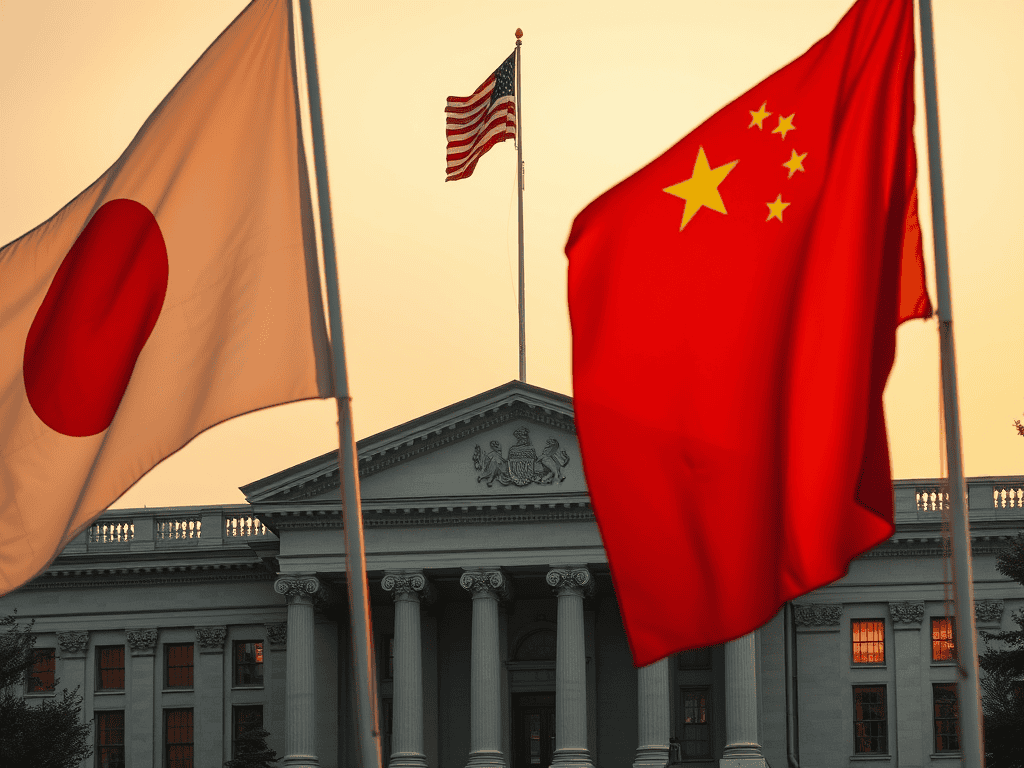
Japan reduced its U.S. Treasury holdings by roughly $119 billion in a single quarter — the largest drawdown on record.
China’s holdings have fallen more than 40% from peak levels.
These are not chaotic exits.
They are strategic reallocations into:
- Local currency settlement
- Gold accumulation
- Regional payment systems
- Reduced dollar dependency
The move is not away from safety —
it is toward autonomy.
The System Cracks in the Pipes First
Before markets “break,” they leak.
- Real yields compress unnaturally
- Repo markets grow sensitive to collateral availability
- Money funds overlap with stablecoin-backed Treasury flows
- Shadow liquidity expands off balance sheets and on-chain
These stresses don’t make headlines.
They surface quietly — in the plumbing.
Belief moves first. Prices follow later.
Conclusion
U.S. debt still anchors global liquidity. But the choreography of confidence is changing.
Institutions relying on Treasuries as pristine collateral now face repricing risk.
Retail investors inherit “safe asset” assumptions that no longer map cleanly to reality.
Digital protocols that tokenized Treasuries now inherit sovereign fragility.
Foreign governments no longer converge on the dollar — they orbit it selectively.
This is not collapse.
It is a belief reversal — unfolding slowly, structurally, and globally.
Further reading: