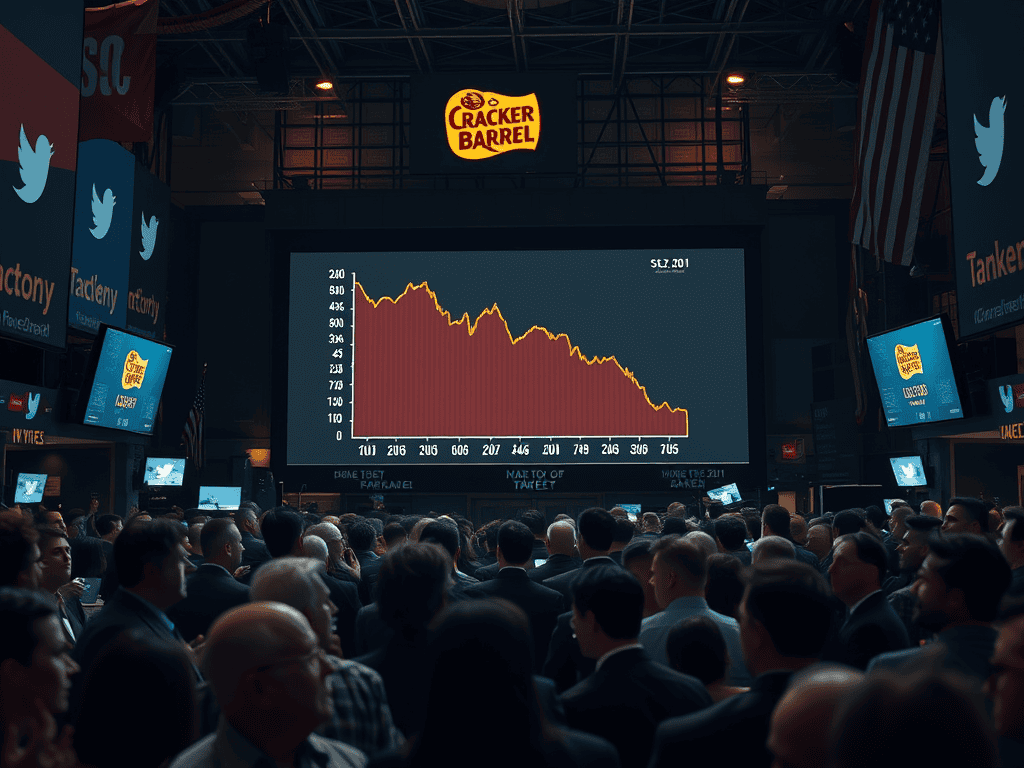
In August 2025, Cracker Barrel Old Country Store Inc. unveiled a refreshed logo, removing the familiar “Old Timer” figure. Within hours, social feeds erupted with boycott calls and moral condemnation.
The data told a different story. Out of 52,000 posts on X during the first 24 hours, nearly half showed automated or bot-like signatures. Close to 49 percent of boycott-tagged posts exhibited patterns of synthetic coordination. What looked like genuine public fury was rehearsed mimicry—an engineered emotional cascade.
Choreography—How Synthetic Sentiment Manufactures Emotion
The actors were not crude spam accounts; they were belief simulators. Using generative Artificial Intelligence (AI), they constructed arguments, mimicked human cadence, and echoed cultural grievances.
- The Goal: Their work wasn’t persuasion; it was amplification. Synthetic sentiment doesn’t seek accuracy. It seeks velocity. It rehearses consensus at a pace no human movement can match.
- The Performance: The illusion of revolt was powerful enough to push Cracker Barrel’s stock down six percent intraday. Investors then realized that fundamentals had not changed.
When Optics Overtake Fundamentals
Cracker Barrel’s financials were stable. Revenue, Earnings Per Share (EPS), and guidance had not shifted. Yet analysts briefly adjusted brand-risk models because the conversation density restored a dangerous truth: valuation now includes optics.
- The Inversion: Earnings matter. But the perceived legitimacy of earnings matters more. Price can be moved not by performance but by performance of sentiment—an inversion where narrative volatility becomes financial volatility.
- The Sovereign Actor: Synthetic sentiment has evolved into a sovereign force—a programmable derivative of public emotion. It collapses brands without touching the balance sheet. It reshapes reputations without any organic constituency. It forces markets to price illusions as if they were signals.
The Cracker Barrel stock drop confirms that modern reputational risk is programmable. The spectacle of confidence—or the staged collapse of it—is now a tradable asset.
The New Market Physics
The Cracker Barrel incident mirrors a broader structural landscape where symbolic performance is substituting for architectural integrity across multiple domains:
- AI rehearses innovation optics.
- Crypto rehearses liquidity optics.
- Governments rehearse stability optics.
- Bots rehearse citizen optics.
All of them feed a single belief engine: the spectacle of confidence. The market reacts long before verification arrives.
Citizen Impact—Learning to Read the Signals Correctly
For citizens and investors, the Cracker Barrel incident is not a social-media glitch. It is a warning flare: reputational volatility is now programmable. Outrage can be manufactured. Consensus can be simulated. Collapse can be staged.
- The Challenge: The challenge isn’t misinformation—it’s misperception, the ability to confuse coordinated choreography with authentic dissent.
- The New Literacy: The citizen must now become a forensic reader of emotional liquidity. They need to analyze velocity, coordination patterns, and generative signatures. This helps distinguish genuine dissent from synthetic influence.
Conclusion
The Cracker Barrel incident proves that modern reputational risk does not begin with misconduct. It begins with synthetic belief. Outrage no longer tracks behavior; it tracks velocity. Trust no longer erodes slowly; it collapses in seconds. And the markets react long before verification arrives.
The next major brand failure won’t start with a scandal. It will start with choreography—emotional liquidity masquerading as public sentiment. The next reputational collapse won’t begin with bad behavior. It will begin with synthetic belief.
Further reading: