Tag: Redemption Optics

  • The Collapse of Gatekeepers

    The Collapse of Gatekeepers

    When OpenAI executed roughly 1.5 Trillion in chip and compute-infrastructure agreements with NVIDIA, Oracle, and AMD, it did so with unconventional methods. There were no major investment banks involved. No external law firms were used. They also did not rely on traditional fiduciaries.

    The choreography is unmistakable: a corporate entity, structuring its own capital and supply chains as a sovereign actor. This move aims to invest up to 1 Trillion by 2030. It seeks to scale compute, chips, and data-center operations. It systematically disintermediates the very institutions that historically enforce transparency and fiduciary duty in global finance.

    The Governance Breach—Why Institutional Oversight Fails

    The systematic disintermediation of banks, auditors, and legal gatekeepers results in governance breaches. These breaches redefine risk for investors. They also redefine risk for citizens.

    1. Verification Collapse

    • Old Model: Citizens trusted banks and auditors as custodians of legitimacy. External review ensured adherence to established financial and legal frameworks.
    • New Reality: OpenAI’s internal circle structures deals confidentially, bypassing fiduciary review. This collapses the external verification layer, forcing investors to rely on choreography—narrative alignment—instead of the usual architecture of deals.

    2. Infrastructure Lock-In

    • The Mechanism: OpenAI is gaining control over digital infrastructure. It does this by managing chips, supply chains, cloud capacity, and data centers.
    • The Risk: This creates profound market dependencies. If OpenAI defaults, it can rupture the value chain for its sovereign partners (NVIDIA, AMD). A pivot can also affect the entire AI ecosystem.

    3. Antitrust and Regulatory Exposure

    • The Risk: The Federal Trade Commission (FTC) has opened sweeping investigations into cloud-AI partnerships, exploring dominance, bundling, and exclusivity.
    • The Failure: The scale and speed of OpenAI’s deals exceed the audit capacity of regulators. The absence of external advisory scrutiny provides cover, allowing OpenAI to move faster than oversight can keep pace.

    4. The Oversight Poser

    Independent gatekeepers have been systematically bypassed. Governance is not being codified through institutional structure; it is being consented through alignment. Among AI platforms, the absence of oversight has become the feature.

    The Citizen’s New Discipline

    The collapse of gatekeepers demands a new literacy. The citizen and investor must become cartographers of this choreography to survive the information asymmetry.

    What Investors and Citizens Must Now Decode

    • Audit the Choreography: Who negotiated the deal? Were external fiduciaries present? The absence of a major bank name is itself a red flag, signaling a non-standard capital structure.
    • Track the Dependency Matrix: Which chips, data centers, and cloud providers are locked in? This reveals where the market is most structurally exposed to an OpenAI failure or pivot.
    • Map Regulatory Risk: Are there active FTC or Department of Justice (DOJ) investigations that could rupture the value chain? Use regulatory signals as your red-flag radar.
    • Look for Redemption Gaps: If the deal fails, what are the fallback assets? What protections exist for investors or citizens? Without third-party custodians, redemption relies solely on OpenAI’s internal discipline.

    Conclusion

    The collapse of gatekeepers is not a side effect of the AI boom; it is a structural pillar. OpenAI’s 1.5 Trillion in chip and compute deals shows that capital is now structuring its own governance. This occurs outside the traditional financial perimeter.

    The New Mandate

    • Demand choreography audits, not just financial statements.
    • Push for third-party review in national-scale infrastructure deals.
    • Recognize that value is no longer earned through compliance—it’s granted through alignment.

    There is a systemic risk if the governance architecture is bypassed. Then, the market must rely entirely on the integrity of the individuals in control. The collapse of the gatekeepers signals the end of institutional oversight. It replaces it with sovereign choreography where only the most vigilant will survive.

  • Token Buybacks and the Optics of Sovereignty

    Token Buybacks and the Optics of Sovereignty

    The Burn That Mints Belief.

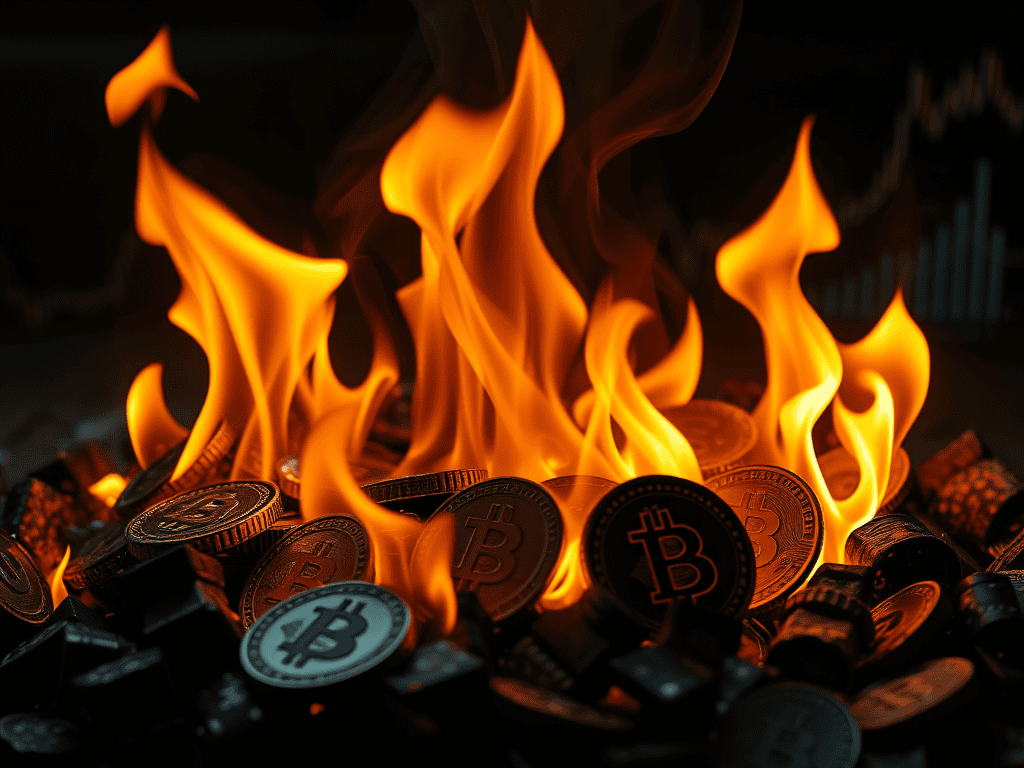
    Across the 2025 on-chain economy, a quiet ritual has taken hold. Protocols from Uniswap to MakerDAO to Lido are using revenue to buy back and burn tokens. This action shrinks supply. It tightens charts and rehearses scarcity. It is the old Wall Street buyback logic transposed into smart contracts. But unlike listed companies, protocols rarely publish schedules, governance pathways, or verifiable treasury flows.

    Protocols as Sovereign Actors

    Protocols now simulate the behavior of central banks and public companies—minting belief through discretionary scarcity rather than expanding utility. Where growth narratives once anchored valuation, choreography now substitutes for architecture. Buybacks convert liquidity into symbolism. Markets read them as confidence. Protocols treat them as a ritual.

    Structural Scarcity vs. Symbolic Scarcity

    This shift marks the rise of symbolic yield—a valuation regime where optics matter more than utility. The rational investor must now distinguish architecture from ritual.

    The Scarcity Ledger

    • Structural Scarcity (Architecture):
      • Examples: Bitcoin’s halving, Ethereum’s fee burn.
      • Mechanics: Hard-coded, automated, rule-bound, and verifiable. Supply contraction is an enforceable consequence of the protocol’s existence.
    • Symbolic Scarcity (Ritual):
      • Examples: Discretionary treasury buybacks, one-off governance burns.
      • Mechanics: Discretionary, contingent on foundation approval or centralized treasury management. Creates the optics of value without the architecture of redemption.

    Buybacks as Protocol Policy

    Regulators have begun to acknowledge this new choreography. The Securities and Exchange Commission (SEC)’s Digital Commodities Guidance of September 2025 declined to classify token buybacks as securities actions. It framed them instead as “protocol-level liquidity operations.” Dubai’s Virtual Assets Regulatory Authority (VARA) introduced a Public-Epoch Disclosure Rule requiring protocols to timestamp buyback executions.

    Yet, governance remains opaque. CoinMetrics’ Q3 2025 Supply Dynamics Report found that most leading decentralized finance (DeFi) protocols conduct burns. These burns happen without any on-chain governance trail.

    Why Investors Must Decode Symbolic Scarcity

    The integrity of a buyback is determined not by the size of the burn. It is defined by the transparency and verifiability of the mechanics behind it. Vigilance is no longer optional; it is fundamental due diligence.

    Investor Audit Checklist

    • Audit Redemption: If you cannot redeem the token for services, collateral, or enforceable governance, the burn is symbolic.
    • Map Utility: If use cases do not expand after the burn, the choreography is decorative.
    • Audit Governance: If token voting is non-binding or ignored, the burn is optical, not sovereign.
    • Track Treasury Flows: If buybacks are funded by recycled venture liquidity, they are not from genuine protocol earnings. In this case, the ritual is covering fragility.
    • Inspect Burn Mechanics: If the burn is discretionary and not hard-coded in the smart contract, it signals belief manufacture. It does not show supply discipline.

    Conclusion

    Token buybacks have become the fiscal theater of the digital economy. They compress supply. They inflate belief. They choreograph legitimacy in lieu of structural reform. The architecture does not collapse. It performs. Investors must learn to read the choreography. They need to audit the redemption layer, the treasury rails, and the governance logic. Otherwise, they risk underwriting narrative rather than substance. The next valuation frontier is semiotic. Those who fail to audit belief will mistake ritual for reward. In protocol finance, the asset is not the token. The asset is the belief it performs.