Tag: robotics

  • S&P 500 Giant’s Supply Chain Resilience: Amazon

    Summary

    • Regionalization Pivot: By 2026, 76% of U.S. orders are fulfilled within their own region, dismantling the hub‑and‑spoke model and reducing exposure to fuel spikes and weather shocks.
    • Energy Sovereignty: Amazon built a 34GW renewable portfolio across 600+ projects, adding nearly 4GW in 2025 alone, shielding fulfillment hubs and data centers from grid volatility.
    • AWS Backlog Buffer: With a $244B AWS backlog (up 40% YoY), Amazon secured locked‑in demand, transforming financial resilience into sovereign optionality.
    • Automation & AI Mastery: Amazon’s 750,000+ robots and internal AI systems — from Rufus to Nova models — automate operational readiness across its logistics empire.

    The Regionalization Pivot (2025–2026)

    Amazon dismantled its national hub‑and‑spoke model in favor of eight self‑sufficient regions.

    • Outcome: By early 2026, 76% of all U.S. orders are fulfilled within their own region, reducing middle‑mile exposure to fuel spikes and weather shocks.
    • Performance edge: In 2025, billions of items were delivered same‑day or next‑day in the U.S., a 30% increase in speed driven by regional “shortened rails.”

    This case study builds directly on the article; How S&P 500 Giants Secured the 2026 Edge Through Supply Chain Resilience. Where that article mapped resilience as the defining premium of the S&P 500, Amazon exemplifies it in practice — showing how regional hubs, sovereign energy, and AWS demand transformed logistics into sovereignty.

    The 4GW Energy Island Strategy

    Amazon recognized that resilience requires sovereign energy.

    • 34GW portfolio: Amazon has invested in 600+ solar and wind projects, totaling 34GW of capacity, making it the world’s largest corporate buyer of renewable energy.
    • 4GW blitz: In the past 12 months, Amazon added nearly 4GW of new capacity, including 1.2GW in Q4 2025 alone, shielding data centers and fulfillment hubs from grid volatility.

    The AWS Backlog: $244 Billion Sovereign Proxy

    Amazon’s resilience is also financial.

    • Locked‑in demand: AWS reported a $244 billion backlog in late 2025, up 40% year‑over‑year, representing signed commitments rather than speculative growth.
    • Operational readiness: Amazon deploys 750,000+ robots across fulfillment centers and leverages internal AI systems — from Rufus (shopping assistant) to Nova foundation models — to automate logistics at scale.

    Comparative Edge (2026)

    Amazon’s resilience stands out when contrasted with legacy e‑commerce models. Where traditional players still rely on a national hub‑and‑spoke system, Amazon has regionalized into eight sovereign hubs, ensuring most orders are fulfilled locally and insulated from systemic shocks.

    Instead of depending on the public grid, Amazon has built a 34GW renewable portfolio, creating sovereign energy rails that shield its fulfillment and data centers from volatility.

    On automation, legacy firms deploy partial robotics, but Amazon operates with 750,000+ mobile robots, designed for agility and scale across its fulfillment network.

    Finally, while competitors lean on quarterly revenue cycles, Amazon’s $244 billion AWS backlog provides unmatched demand visibility — a financial buffer that transforms resilience into sovereign optionality.

    Conclusion

    This analysis complements the article; How S&P 500 Giants Secured the 2026 Edge Through Supply Chain Resilience by showing Amazon as the logistics sovereign of the S&P 500. Where Schneider Electric embodies physical sovereignty, P&G informational sovereignty, Walmart distribution sovereignty, J & J pharmaceutical sovereignty, and Cisco visibility sovereignty, Amazon demonstrates sovereign optionality — rewriting the laws of logistics physics through regional hubs, renewable energy, and locked‑in AWS demand.

    For policy makers and institutional investors, the lesson is clear:

    • Regionalization is resilience. Eight hubs shorten rails and reduce systemic shocks.
    • Energy sovereignty is defense. 34GW of renewables shield operations from grid volatility.
    • Financial buffers are optionality. A $244B AWS backlog secures future demand.
    • Automation is scale. 750,000+ robots and AI mastery transform fulfillment into physics.
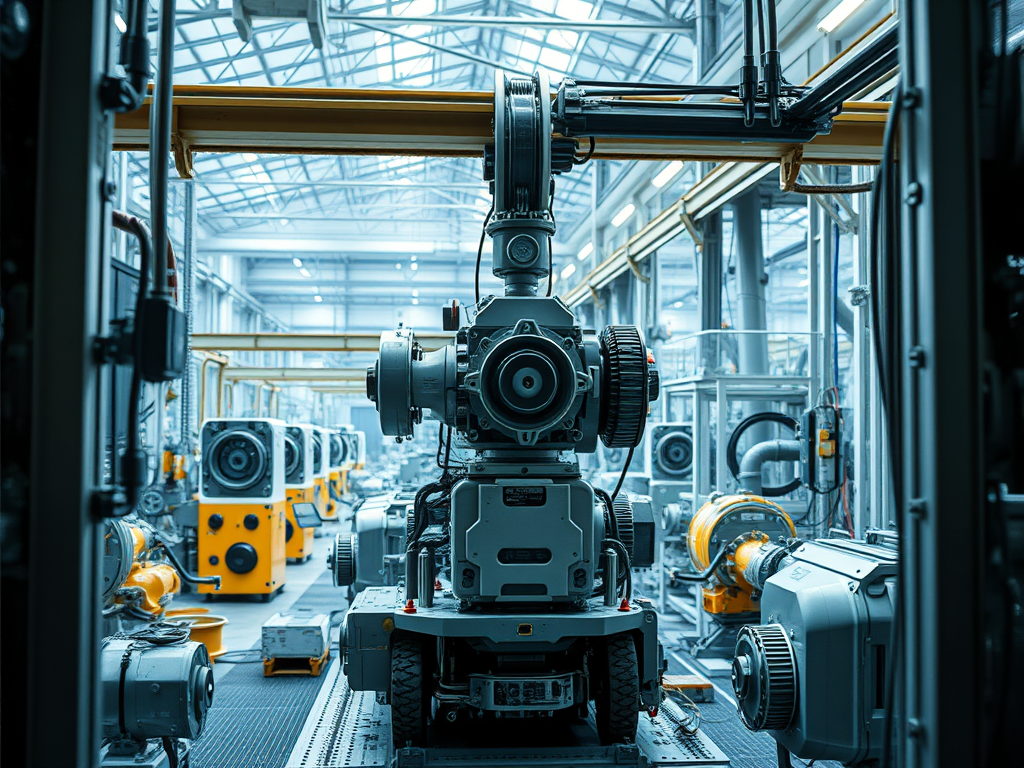
  • Germany’s Industrial Excellence Fell Out of Sync

    Germany’s Industrial Excellence Fell Out of Sync

    For most of the postwar century, “Made in Germany” was the global shorthand for precision, reliability, and mechanical superiority. Its industrial choreography—defined by automotive robotics, optical sensors, and mechatronic control—became the definitive economic identity of Europe. Germany’s factories were temples of control; its engineers, the priests of a mechanical faith that promised perfection through discipline.

    But the global tempo has changed. The world no longer waits for perfection. Japan rewrote the industrial rhythm through lean manufacturing. South Korea rehearsed modular agility by collapsing design cycles from years to months. China scaled the choreography, producing machinery that was “good enough.” This was done at a velocity Germany could not match. Germany’s supremacy did not collapse under its own weight—it was simply outpaced.

    The Erosion of Industrial Superiority

    The erosion of German dominance was gradual, but the symbolic breaches were unmistakable. The mythos of the “German machine” endures. However, its industrial sovereignty has become ceremonial. It serves as a symbol of quality that lacks the velocity required for modern markets.

    • The Automation Shift: Robotics was once a field defined by German pioneers like KUKA AG. Now, it bows to the scaling power of China. The 2016 acquisition of KUKA by Midea was a watershed moment. It signaled that the “brain” of German automation was being integrated into a higher-velocity Eastern rail.
    • The Electric Pivot: Automotive components once anchored the German crown. They have now been displaced by the electric-era leadership of Japan and South Korea.
    • Regulatory Overhang: German machinery remains world-class. However, its production is increasingly constrained by slow innovation cycles. There are heavy regulatory burdens. Additionally, there is a cultural aversion to the high-risk “crash-back” strategies used by rivals.

    The Tempo Mismatch—Velocity vs. Technique

    The modern industrial order moves at a speed that incremental perfectionism cannot sustain. The global choreography has fragmented into hyper-globalized, modular networks where speed is the ultimate premium.

    • Modular Supply Chains: Today, design happens in Seoul, fabrication in Arizona, and assembly in Vietnam. German engineering, built on deep vertical integration and multi-year design phases, struggles to plug into this modular pulse.
    • Quarterly Refresh Cycles: Innovation cycles that once spanned a decade now refresh every quarter. Germany’s focus on long-term durability is facing challenges. The market now demands newer technology over permanent solutions.

    Political Lag—Coalition Optics and Reform Fatigue

    Germany’s economic stagnation is mirrored by its political tempo. The state itself has become a drag on innovation, performing stability while the world demands transformation.

    • Consensus as Ritual: Coalition governments in Berlin often rehearse consensus as a ritual rather than a strategy. Critical reforms are trapped in procedural optics: subsidy debates, fiscal orthodoxy, and intra-party negotiations.
    • Procedural Drag: While the political system is disciplined, it is fundamentally slow. In the 21st century, institutional slowness is not just an administrative quirk. It is a structural risk. It prevents the codification of velocity.

    Narrative Collapse—The Memory of “Made in Germany”

    In the symbolic economy of belief, narratives age as quickly as products. “Made in Germany” still commands respect, but it no longer commands momentum.

    • The Export of Memory: Japan exports efficiency; South Korea exports agility; China exports scale. Germany, increasingly, exports memory—the reputation of what its engineering used to mean.
    • Investor Preference: Capital is migrating away from precision-heavy models toward AI-integrated supply chains and velocity-aligned engineering. The German narrative has not collapsed; it has simply lost the beat of the market.

    Conclusion

    Germany’s challenge is not to rebuild its precision—the quality of its engineering remains intact. The challenge is to re-sync with the global rhythm of the 21st century.

    To survive the shift, the German industrial complex must evolve:

    • Precision into Agility: The focus must shift from the “perfect machine” to the “adaptive system.”
    • Discipline into Alignment: Export discipline must evolve into symbolic alignment with the digital and AI eras.
    • Audit the Tempo: Citizens and policymakers must audit not just GDP, but the speed of their own institutions.

    Industrial sovereignty is no longer a fortress to be defended. It is a dance floor where the fastest move wins. Germany remains a priest of mechanical faith in a world that has moved on to digital velocity. The temple of control must learn to dance at the speed of the bazaar. If not, it will remain a ceremonial capital in an empire that has already moved on.

    Further reading: