Tag: Samsung

  • The Memory Wall: Auditing the $60B AI Vaults

    The Brief

    Sector: High‑bandwidth memory (HBM3) — the critical layer defining AI cluster performance and efficiency.

    Capital Allocation: $90B (9% of the Data Cathedral) directed toward memory, reshaping semiconductor ETFs and hyperscaler CapEx.

    Forensic Signal: Memory Sovereignty — bandwidth, not compute, is the new systemic choke point. Control of HBM3 yields defines competitive advantage.

    Strategy: Track SK Hynix, Samsung, and Micron as the dominant suppliers. Monitor yield rates, geopolitical risk, and sovereign attempts at memory independence to identify portfolio opportunities.

    Investor Takeaways

    Structural Signal: Memory bandwidth, not compute, is the new systemic choke point. HBM3 defines AI cluster performance.

    Systemic Exposure: $90B (9% of the Data Cathedral) is allocated to memory — reshaping semiconductor ETFs and hyperscaler CapEx.

    Narrative Risk: Current valuations assume uninterrupted HBM3 scaling; sentiment could flip if yield issues or supply chain disruptions emerge.

    Portfolio Implication:

    • SK Hynix: Market leader in HBM3; premium pricing sustained by scarcity.
    • Samsung: Diversified exposure; positioned for volume but vulnerable to margin compression.
    • Micron: U.S. sovereign play; potential upside if export controls tighten.

    Macro Link: Geopolitical risk in Korea and U.S.–China tech tensions amplify volatility in memory equities and ETFs.

    Full Article

    In our earlier analysis, we ventured into the Data Cathedral—mapping the shift as AI transitions into a physical monument. After auditing the $350B Land Grab, the $250B Silicon Paradox, the $150B Power Rail, the $70B Thermal Frontier, and the $130B Great Decoupling , we arrive at the Vaults of the Cathedral.

    This report marks the sixth in our forensic series. We are now auditing the $60 Billion Storage & Memory layer. In 2026, the AI revolution has hit a “Memory Wall.” The fastest chips in the world are being throttled because they cannot retrieve data fast enough. The companies that own the “Vaults” now hold the ultimate leverage over the Cathedral’s timeline.

    The Forensic Ledger: The Gatekeepers of the Synapse

    The “Memory Wall” is the physical gap between processor speed and data access. To bridge it, we use HBM3e—stacked memory that sits directly on the GPU. But this technology is so complex that only two players have currently mastered it.

    • SK Hynix: The Sovereign of HBM The South Korean giant is the undisputed leader in HBM3e. They were the first to master the “Mass Reflow Molded Underfill” (MR-MUF) process, which is the only way to stack these chips without overheating. They currently hold nearly 50% of the HBM market and are Nvidia’s primary partner for the Blackwell series.
    • Micron Technology (MU): The American Champion Micron is the only US-based firm competing at the leading edge. Their HBM3e consumes 30% less power than their competitors—a massive advantage in the power-constrained environments we audited in Part 3. The market still treats Micron as a “cyclical” company, but their 2026 HBM capacity is already 100% sold out.
    • Samsung: The Fallen Giant Samsung has faced a forensic crisis in yield rates, struggling to pass Nvidia’s qualification tests throughout 2025. Until they achieve stable yields, the $60B memory market remains a high-margin oligopoly for SK Hynix and Micron.

    The “Nvidia-Proof” Audit: Risk vs. Reality

    Investors are rightfully concerned about Nvidia’s Cash Conversion Gap and the “Great Decoupling” from Hyperscalers like Google. Here is why the Memory Vaults are structurally shielded from these risks:

    1. Senior Creditor Status: Nvidia cannot build a single Blackwell chip without HBM3e. Because of this, Nvidia provides massive pre-payments and Long-Term Purchase Agreements (LTPAs) to SK Hynix and Micron to lock in supply. Even in a cash crunch, these memory providers are the last ones to go unpaid. If Nvidia stops paying for memory, Nvidia stops existing.
    2. The Google Paradox: When Google, Amazon, or Meta succeed in building their own “Whole Stack” silicon (like the TPU), they still require the same HBM3e. By diversifying the customer base beyond just Nvidia, SK Hynix and Micron gain even more pricing power. They are the arms dealers for every army in the AI war.
    3. Pricing Sovereignty: HBM3e sells for 5x to 7x the price of standard DRAM. Because yield rates are physically capped at ~60%, the supply is permanently scarce. This allows memory makers to maintain high margins even if GPU prices begin to normalize.

    Conclusion

    The Data Cathedral is only as fast as its slowest vault. In 2026, the “Memory Wall” is the primary reason for the AI hardware backlog. We have audited the ‘Yield-to-Shipment’ ratios for the top three makers—identifying the exact quarter Samsung is projected to break through the qualification barrier and disrupt the HBM oligopoly.

    This is Part 6 of 7. Tomorrow, we conclude our forensic series with the “Systemic Integration” ($40B)—auditing the firms that piece the entire $1 Trillion puzzle together.
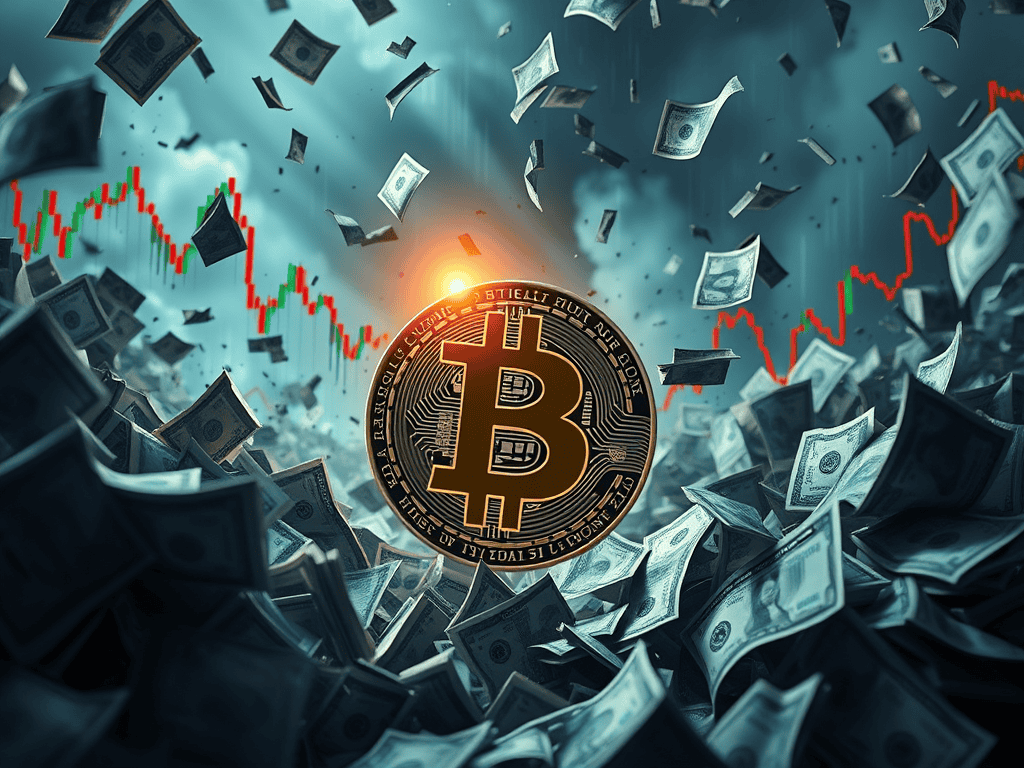
  • Immediate Impact of BoJ Rate Hike on Bitcoin and Risk Assets

    Immediate Impact of BoJ Rate Hike on Bitcoin and Risk Assets

    The immediate aftermath of the Bank of Japan’s historic rate hike to 0.75 percent has been nothing short of a systemic bloodbath for risk assets. While traditional analysts searched for crypto-specific news to explain the sudden drop, the truth was visible in the plumbing of the global carry trade.

    This move triggered a multi-layer unwinding process where Bitcoin was no longer treated as “digital gold,” but as the most liquid collateral available to patch holes in deteriorating global balance sheets.

    The Long Squeeze: When Math Supersedes Belief

    Between December 19 and 20, 2025, the crypto derivatives market experienced a violent “Long Squeeze.” Approximately 643 million dollars in leveraged positions were wiped out in a matter of hours.

    • The Forced Exit: Roughly 85 percent of these liquidations were forced long positions. These traders did not choose to sell based on a change in belief; instead, exchange engines automatically liquidated them as their collateral values fell below margin thresholds.
    • The Scam Wick: On several Asian exchanges, Bitcoin plummeted from 88,000 to 84,000 dollars in minutes. This was a “fat-tail” move—a technical event driven by liquidation mechanics rather than organic market sentiment.

    This volatility was not about the long-term viability of the protocol. It was a math-based cascade where the “Scam Wick” served as the definitive signal of an over-leveraged market meeting a liquidity vacuum. The derivatives market isn’t a voting machine; it’s a calculator. When the Bank of Japan hiked, the calculator forced a settlement that belief could not stop.

    Corporate Treasury De-Risking: Bitcoin as the Liquid Reserve

    By 2025, over 200 public companies had deployed a collective 42.7 billion dollars into crypto treasuries. As the yen carry trade unwound, these firms faced immediate pressure on their debt-to-equity ratios.

    • The Rebalancing Trigger: To maintain financial covenants and shore up balance sheet health, corporate treasuries were forced to sell their most liquid non-core assets. Bitcoin, with its 24/7 liquidity, became the primary target for de-risking.
    • Exchange-Traded Fund (ETF) Net Selling: The impact extended to the institutional layer. Spot Bitcoin Exchange-Traded Funds became net sellers in the fourth quarter of 2025, shedding 24,000 Bitcoin. This was not a lack of conviction in the asset class, but a structural need to cover losses in equities and bonds.

    Corporate treasuries currently treat Bitcoin as “High-Beta Oxygen.” When the macro atmosphere thins due to policy hikes, they consume their Bitcoin reserves to keep their core industrial operations alive.

    The South Korean Proxy: KOSPI and the Kimchi Collapse

    The collapse of the “Kimchi Premium” provides the final piece of the Bank of Japan shock ledger. South Korea’s Korea Composite Stock Price Index (KOSPI) became the worst-performing major Asian index during the hike week, acting as the primary proxy for yen carry trade stress.

    • The Tech Correlation: Global funds unwinding yen-financed positions in South Korean technology giants like Samsung and SK Hynix did not stop at equities. To raise cash quickly, these funds “swept” their crypto holdings simultaneously.
    • The Correlation Shock: Bitcoin fell sharply despite a lack of crypto-specific headlines. This was pure collateral damage from the liquidity unwinds in Seoul and Tokyo.

    Crypto is now tightly coupled to Asian equity flows. In this regime, the “Kimchi Premium” turned into a “Kimchi Discount” as the regional liquidity engine stalled.

    The BOJ Shock Ledger: A Comparative Overview

    The drivers of this collapse can be isolated across three distinct dimensions:

    • Derivatives: The Bank of Japan hike triggered automated margin calls. Exchange engines auto-liquidated 643 million dollars in longs, sending the price to an 84,000-dollar “wick.” The signal is clear: collateral math is the only reality that matters during a liquidity mop-up.
    • Corporate Treasuries: Global liquidity tightening forced firms to sell Bitcoin to maintain their debt-to-equity ratios. With 24,000 Bitcoin sold by ETFs, the asset is clearly being used as a liquid rebalancing tool, not a static store of value.
    • Regional Equities: The yen carry unwind hit South Korean tech stocks particularly hard. Crypto holdings were swept alongside equity sales to raise cash, proving that digital assets are a high-beta proxy for Asian liquidity.

    Conclusion

    The Bank of Japan’s move to 0.75 percent has revealed the true architecture of the 2025 market. Bitcoin is widely held, institutionally validated, and highly liquid—which makes it the first thing to be sold when the “free money” disappears.

    While the immediate shock has settled, the long-term threat remains within the unraveling of systemic ‘zombie’ carry trades .

    We are no longer in a market of “Belief vs. Skepticism.” We are in a market of “Liquidity vs. Leverage.” The Bank of Japan hike turned the yen from a global subsidy for leverage into a vacuum for risk. For the investor, the lesson is clear: you cannot track Bitcoin without also tracking the Bank of Japan and the KOSPI. Otherwise, you are looking at the shadow instead of the hand.