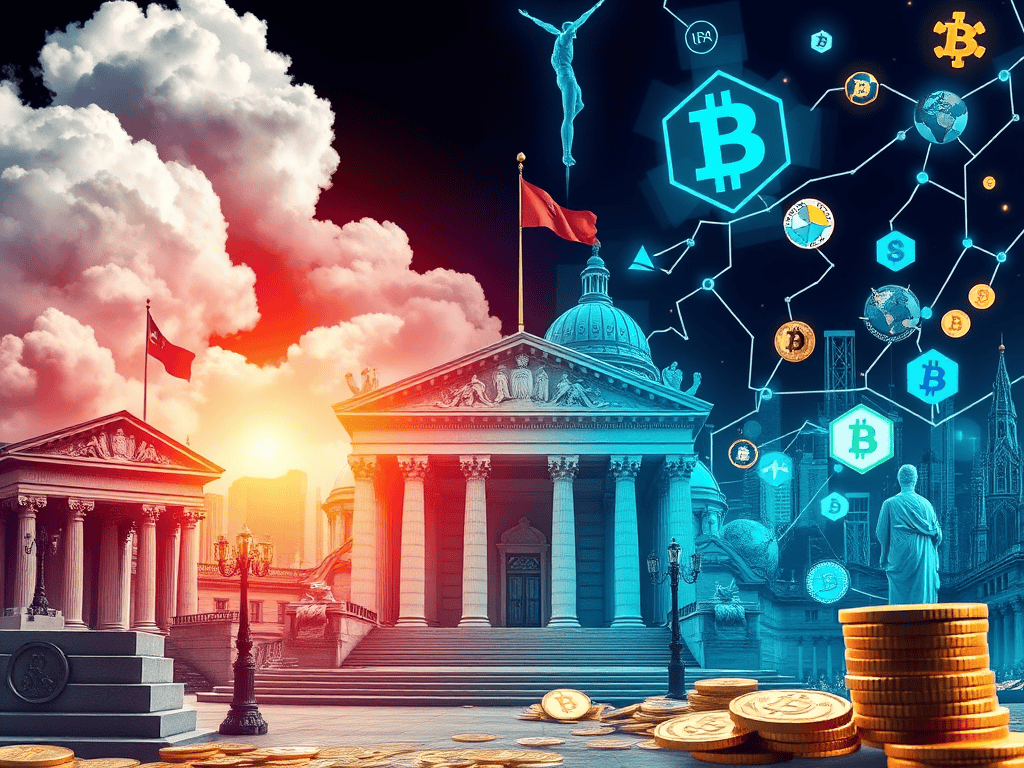
Tag: Sovereign Optics

  • Market Risk is Hiding in the Net Margin Compression

    Market Risk is Hiding in the Net Margin Compression

    The Question That Misses the Stage:

    “Where the hell is the market risk?” — Treasury Secretary Scott Bessent, October 2025.

    He meant it rhetorically. Markets are up. Inflation has cooled. Artificial Intelligence (AI) stocks are soaring. But the answer is hiding in plain sight: risk is no longer in credit, liquidity, or even leverage.

    The market appears resilient because the optics are synchronized. The underlying risk is severe. It resides in the gap between the symbolic scaffolding that supports valuation and the decaying structural integrity beneath it.

    The Architecture of Fragility—Redemption Collapse

    The new markets are built not on fundamentals but on a fragile belief infrastructure where symbolic redemption replaces structural stability.

    Redemption Fragility

    • Sovereign Debt: Sovereign bonds once represented a procedural covenant. Now, as issuance scales and buybacks multiply, even sovereign credit trades like a performance of credibility.
    • The Crash Trigger: If redemption is staged—not earned—markets can collapse not on fundamentals but on optics. Markets don’t crash on fundamentals anymore. They crash on choreography—when belief can’t be redeemed.

    Institutional Erosion

    The foundations of market trust are dissolving through political action that supersedes the rulebook.

    • Erosion of Independence: The Federal Reserve’s independence is now a bargaining chip.
    • Inversion of Standards: Regulatory standards are being inverted. There are pardons for crypto executives, like Changpeng Zhao. There is selective enforcement of Anti-Money Laundering (AML) rules. Fiscal announcements are shaped for sovereign theater. The state no longer disciplines markets; it choreographs them.

    Belief Inflation—The AI Engine

    The AI spending boom is the primary engine of this Belief Inflation—a statistical illusion of expansion that masks underlying fragility.

    • Statistical Illusion: Global AI Capital Expenditure (capex) has surged toward the $375 Billion mark. It is projected to hit $500 Billion by 2026. U.S. Q2 Gross Domestic Product (GDP) numbers are padded by more than a full percentage point from AI-related outlays alone.
    • Theatrical Performance: This capex turns into the temporary scaffold of national growth. Governments are framing AI as sovereign resilience, but the performance is theatrical: spending isn’t innovation—it’s choreography.

    Protocol Sovereignty—The Mirror of Statecraft

    Crypto protocols have become mirrors of statecraft, mimicking sovereign action to mint their own legitimacy.

    • Mimicry: Through token buybacks, burn schedules, and staged scarcity rituals, platforms now mimic central bank behavior.
    • Politicized Legitimacy: The pardon of Changpeng Zhao institutionalized this logic: compliance became negotiable so long as optics aligned.
    • Dissolving Border: The border between fiscal and protocol choreography has dissolved. Sovereigns mint legitimacy through capital optics; protocols mirror the state through burn optics.

    Where the Market Risk Actually Lives (The Russell 2000)

    The surface market looks resilient because the optics are synchronized. But the underlying risk is acute in the less-liquid segments, which serve as the real-time structural ledger.

    • Valuation Extremes: The small-cap Russell 2000 shows a Cyclically Adjusted Price-to-Earnings (CAPE) ratio above 54. This level signals symbolic inflation. It does not indicate profit strength.
    • Net Margin Collapse: Net margins in the iShares Russell 2000 ETF (IWM) are collapsing. They have decreased by a full third year over year. This reveals an earnings structure that is thinning even as belief inflates.
    • Consumer Fragility: Consumer spending is rising through credit, not cash flow. This turns optimism into a rehearsed gesture rather than an earned outcome.
    • Labor Lag: Job creation has stalled, a lag masked by sampling noise and narrative pacing.

    Net margin compression in the Russell 2000 is the breach beneath symbolic growth. The economy appears resilient because the optics are synchronized—not because the foundations are strong. The investor who chases AI-driven capex but ignores Russell 2000 earnings compression is misreading the stage.

    Conclusion

    The market risk is not missing; it has gone epistemic. It exists in the widening gap between symbolic scaffolding—AI capex, sovereign narrative discipline, and protocol mimicry. This contrasts with the structural reality of eroding margins, unserviceable debt, and institutional decay. Sovereign actors and protocols are choreographing resilience to defer gravity. The risk isn’t in credit; it’s in the choreography literacy of the audience.

  • Crypto, Clemency, and the Proximity to Power

    Crypto, Clemency, and the Proximity to Power

    In 2023, Changpeng Zhao founded Binance. He pleaded guilty to failing to implement Anti-Money Laundering (AML) controls at the exchange. The breach wasn’t theft; it was procedural collapse at protocol scale. Zhao stepped down, paid a $4.3 billion penalty, and served four months.

    Upon the announcement of the pardon, Binance Coin (BNB) surged 7% to $1,145. This surge confirmed that the market no longer prices governance. It prices proximity to power.

    The Choreography of Redemption

    The pardon was executed as a strategic capital event. It was not just a quiet legal release. The event was choreographed to provide maximum symbolic and financial effect.

    The Sovereign Gesture

    On October 20, 2025, Donald Trump granted a presidential pardon to Changpeng Zhao. He framed the prosecution as Biden’s “war on crypto.” Trump cast Zhao as a persecuted innovator.

    • Pre-Pardon Alignment: Days before, Binance-linked entities announced a $2 Billion capital partnership with World Liberty Financial. This organization has an advisory roster that includes multiple Trump-aligned operatives.
    • Post-Pardon Action: Hours after the pardon, Binance Holdings registered a new U.S. entity in Texas under the name “Binance U.S. Liberty Markets.”

    The Market’s Vote of Confidence

    The market treated the pardon not as a political gesture. It was viewed as a capital event. This instantly validated the shift in the basis of legitimacy.

    • BNB Rally: BNB rallied, pushing Binance Coin’s market capitalization above $158 Billion.
    • Liquidity Surge: The Binance Smart Chain’s total value locked rose, and daily exchange liquidity surged past $24 Billion.

    This immediate and aggressive market reaction reflected renewed access and reduced perceived regulatory risk. Power and alignment had replaced accountability. The breach became a performance.

    Sovereignty Drift—The New Governance Risk

    This convergence of political optics and market valuation signals a systemic shift: Sovereignty Drift. The crypto ecosystem is drifting from trustless architecture toward personality-anchored legitimacy.

    • The Parallel: Zhao’s governance failures and Trump’s sovereign gesture were framed as persecution and liberation, respectively. The CZ pardon functions as a soft override of governance.
    • Redemption Bypassed: The rule of law did not collapse. It was bypassed—rehearsed as optics rather than enforced as architecture.
    • Governance Rewired: A pardon gifted to a protocol figure does more than absolve wrongdoing. It rewires legitimacy. It signals that governance is discretionary. It informs the market that alignment can override audit, investigation, and enforcement.

    The Citizen and Investor Must Now Decode

    Power redeems itself through narrative rather than structural integrity. The burden of discernment shifts to those still inside the market. They must audit the redeemer, not just the code.

    • Audit the Redeemer: Track the political actors involved, the advisory boards, and the synchronous narratives.
    • Track Timing, Not Disclosures: Monitor the timing of capital movements, partnerships, and new entity registrations relative to political announcements.
    • Decode Alignment: Recognize that when proximity becomes collateral, liquidity gains depth but loses autonomy.

    Conclusion

    Changpeng Zhao’s pardon signals more than the absolution of a founder. It signals that the market has accepted the shift. In this new terrain, proximity to power becomes policy and alignment becomes legitimacy. Unless the citizen and investor decode this choreography, they risk navigating a system. In this system, trust becomes politicized. Redemption becomes narrative. Governance becomes theatre.

  • When Trump Embraced Crypto, the Rule-book Folded

    When Trump Embraced Crypto, the Rule-book Folded

    For over a decade, platforms like Coinbase defined legitimacy in the crypto sector through compliance. Licenses, audits, multi-jurisdictional custody frameworks, and transparent redemption logic gave them institutional gravity.

    Donald Trump’s direct embrace of crypto shows a dangerous structural shift. His elevation of sovereign-aligned platforms also signals change. Legitimacy is no longer earned through rule-based redemption. It is granted through proximity to power. This move fundamentally threatens the compliance moat built by rule-based incumbents.

    Protocol Erosion—When Architecture Loses to Optics

    Compliance was once the necessary backbone for crypto’s institutional adoption. Coinbase built an empire by rehearsing audit discipline while competitors chased offshore loopholes. Now, political choreography reshuffles the hierarchy.

    • Proximity to Power: Platforms tied to political networks, donor circles, or executive optics inherit legitimacy. This occurs regardless of their custody rigor. It also happens independent of their financial structure.
    • Architecture vs. Alignment: The fundamental integrity of the ledger no longer decides trust. Architecture becomes secondary to alignment.
    • Erosion Point: Protocol erosion begins not when rules break—but when rules become irrelevant. The market begins to discount the value of a strong rulebook.

    Symbolic Governance—The Presidency as the New Validator

    Trump’s repeated declarations of support for crypto have a significant impact. These declarations, combined with legislative moves like the GENIUS Act’s passage, shift governance. Governance moves from regulatory clarity to presidential endorsement.

    • Shifting Governance: Governance moves from a process defined by regulators (Securities and Exchange Commission (SEC) or Commodity Futures Trading Commission (CFTC) to a narrative dictated by the executive branch.
    • The New Consensus Layer: The White House becomes a meta-governor. The presidency becomes a consensus layer. Platforms aligned with sovereign figures gain symbolic elevation, while rule-based incumbents are reframed as obsolete.
    • Compliance Displacement: Coinbase spent years building the cleanest custody rails in the industry. Sovereign-aligned entrants can bypass this compliance moat entirely: they do not compete with rules—they compete with proximity.

    The Contagion Extends Beyond Crypto

    This shift toward hierarchical legitimacy is granted through power, not architecture. It rewires the redemption logic of markets. This transformation turns platforms into extensions of political narrative.

    • Stablecoin Risk: Stablecoins that align with sovereign networks may bypass rigorous reserve audits, with political optics substituting for financial scrutiny.
    • Tokenized Assets: Tokenized securities may be fast-tracked while rule-based competitors face opaque delays, creating a two-tiered system for market access.
    • Central Bank Digital Currency (CBDC) Risk: CBDC risk becoming presidential instruments—programmable not for financial efficiency, but for political theatre.
    • Crypto-Native Banks: May receive chartering preference not for solvency but for political patronage.

    Conclusion

    The market stops rewarding rule-based redemption and starts rewarding sovereign choreography. In this shift, trust becomes politicized, redemption becomes narrative, and governance becomes theatre. The danger is not collapse. It is inversion—where the protocol continues to function, but legitimacy migrates to whoever stands closest to power.