Summary
- Tricolor’s AAA‑rated securities and First Brands’ debt facilities collapsed, exposing how ratings agencies certified illusions rather than stability.
- Structured finance repackaged risky loans into “safe” tranches, proving that intricate design often hides fragility instead of reducing it.
- Off‑balance‑sheet financing at First Brands masked billions in liabilities, showing how financial fog undermines solvency and investor trust.
- The issuer‑pays model incentivizes agencies to relax rigor, turning ratings into narratives. Verification, not assumption, is now essential for survival.
Just weeks ago, credit markets looked calm. Tricolor Holdings, a subprime auto lender, was issuing asset‑backed securities (ABS) with tranches stamped AAA. First Brands Group, a major automotive‑parts conglomerate, held billions in revolving debt facilities.
Then the façade cracked. Tricolor filed for Chapter 7 liquidation with liabilities between $1 billion and $10 billion. Its AAA‑rated ABS now trades for cents on the dollar. First Brands sought Chapter 11 protection, burdened by more than $10 billion in debt and another $2.3 billion hidden in opaque supply‑chain financing.
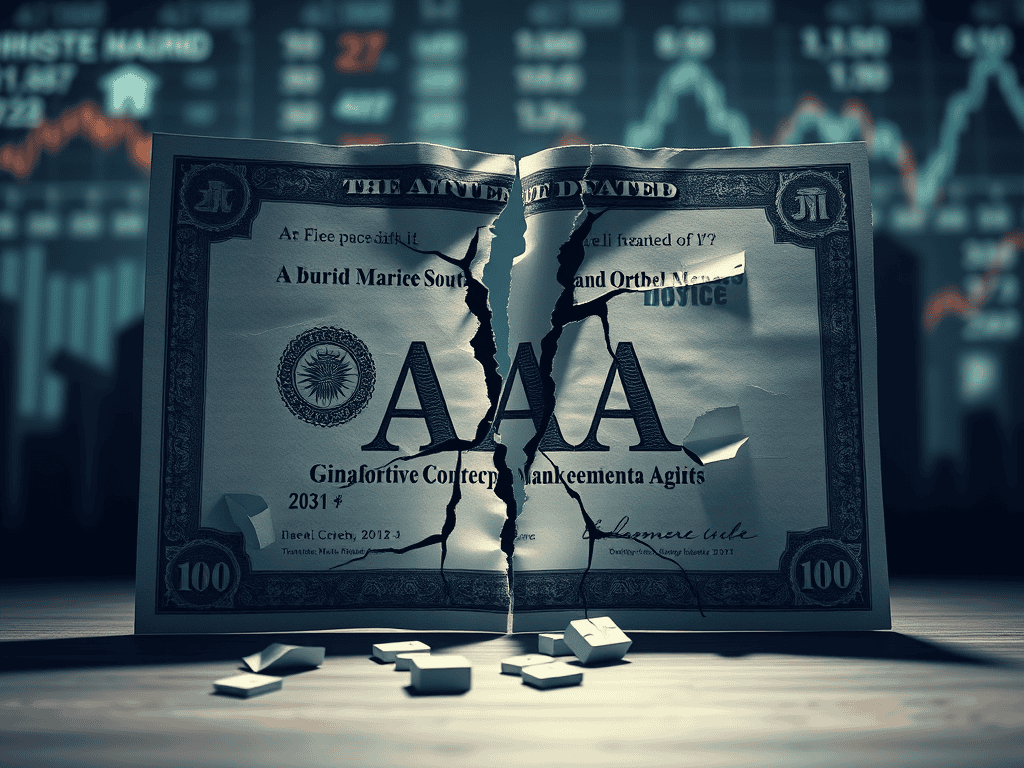
These weren’t sudden storms. Instead, they were engineered illusions finally collapsing. The deeper failure lies not only in the firms but in the institutions that certified their stability: the credit rating agencies. When trust is outsourced to agencies that profit from belief, confidence itself becomes a tradable illusion.
The Anatomy of an Illusion
The rating system failed because it confused complexity with safety. Tricolor’s business model bundled high‑interest, high‑default loans and repackaged them into “safe” senior tranches.
The AAA label wasn’t earned through asset quality. It was manufactured through structural layering and over‑collateralization math. When defaults rose, the structure collapsed. Complexity became camouflage, and risk wore a halo. In short, the more intricate the design, the easier it was to hide fragility.
The Blind Spot of Off‑Balance‑Sheet Debt
First Brands’ bankruptcy revealed how financial opacity masquerades as prudence. Through factoring and supply‑chain finance, it raised billions that appeared as payables rather than debt.
Rating agencies, relying on presented statements, failed to see through the off‑balance‑sheet fog. As liquidity tightened, the façade of solvency dissolved almost overnight.
The Incentives Trap
The issuer‑pays model still governs credit ratings. Sellers of risk pay the agencies that translate it into safety. As a result, agencies compete for business by relaxing standards, while structured‑finance firms shop for the friendliest gatekeeper.
Systemic Threat: From Prop Failure to Trust Failure
The illusion of safety held until it snapped. The parallels to 2008 are clear. Subprime exposure was repackaged as prime. Complexity was mistaken for prudence. Rating agencies enabled systemic delusion.
Tricolor’s collapse proves that the top tranches of engineered debt can vaporize within months of issuance. First Brands shows how shadow debt metastasizes beyond regulatory oversight. Together, they reveal a market where lending standards are props — not protections.
Verification over Assumption
Ratings are narratives, not truth. In today’s high‑yield landscape, risk is once again being manufactured and misrepresented.
Investors must treat each AAA as a hypothesis, not a guarantee. Verification — of collateral, cash flow, and covenant — is the new survival discipline. Regulators must confront the structural conflicts that turn oversight into theatre. Belief without audit is the seed of every future crisis.
Conclusion
The collapse of Tricolor and First Brands is not an anomaly; it is a rehearsal. In this choreography, rating agencies don’t just measure risk — they manufacture it. And when manufactured trust breaks, every letter in AAA spells the same thing: illusion.
Further reading: