Tag: Trump Crypto

  • When Trump Embraced Crypto, the Rule-book Folded

    When Trump Embraced Crypto, the Rule-book Folded

    For over a decade, platforms like Coinbase defined legitimacy in the crypto sector through compliance. Licenses, audits, multi-jurisdictional custody frameworks, and transparent redemption logic gave them institutional gravity.

    Donald Trump’s direct embrace of crypto shows a dangerous structural shift. His elevation of sovereign-aligned platforms also signals change. Legitimacy is no longer earned through rule-based redemption. It is granted through proximity to power. This move fundamentally threatens the compliance moat built by rule-based incumbents.

    Protocol Erosion—When Architecture Loses to Optics

    Compliance was once the necessary backbone for crypto’s institutional adoption. Coinbase built an empire by rehearsing audit discipline while competitors chased offshore loopholes. Now, political choreography reshuffles the hierarchy.

    • Proximity to Power: Platforms tied to political networks, donor circles, or executive optics inherit legitimacy. This occurs regardless of their custody rigor. It also happens independent of their financial structure.
    • Architecture vs. Alignment: The fundamental integrity of the ledger no longer decides trust. Architecture becomes secondary to alignment.
    • Erosion Point: Protocol erosion begins not when rules break—but when rules become irrelevant. The market begins to discount the value of a strong rulebook.

    Symbolic Governance—The Presidency as the New Validator

    Trump’s repeated declarations of support for crypto have a significant impact. These declarations, combined with legislative moves like the GENIUS Act’s passage, shift governance. Governance moves from regulatory clarity to presidential endorsement.

    • Shifting Governance: Governance moves from a process defined by regulators (Securities and Exchange Commission (SEC) or Commodity Futures Trading Commission (CFTC) to a narrative dictated by the executive branch.
    • The New Consensus Layer: The White House becomes a meta-governor. The presidency becomes a consensus layer. Platforms aligned with sovereign figures gain symbolic elevation, while rule-based incumbents are reframed as obsolete.
    • Compliance Displacement: Coinbase spent years building the cleanest custody rails in the industry. Sovereign-aligned entrants can bypass this compliance moat entirely: they do not compete with rules—they compete with proximity.

    The Contagion Extends Beyond Crypto

    This shift toward hierarchical legitimacy is granted through power, not architecture. It rewires the redemption logic of markets. This transformation turns platforms into extensions of political narrative.

    • Stablecoin Risk: Stablecoins that align with sovereign networks may bypass rigorous reserve audits, with political optics substituting for financial scrutiny.
    • Tokenized Assets: Tokenized securities may be fast-tracked while rule-based competitors face opaque delays, creating a two-tiered system for market access.
    • Central Bank Digital Currency (CBDC) Risk: CBDC risk becoming presidential instruments—programmable not for financial efficiency, but for political theatre.
    • Crypto-Native Banks: May receive chartering preference not for solvency but for political patronage.

    Conclusion

    The market stops rewarding rule-based redemption and starts rewarding sovereign choreography. In this shift, trust becomes politicized, redemption becomes narrative, and governance becomes theatre. The danger is not collapse. It is inversion—where the protocol continues to function, but legitimacy migrates to whoever stands closest to power.

  • The Political Performance Of USD1

    The Political Performance Of USD1

    The Product Isn’t Just Financial. It’s Symbolic.

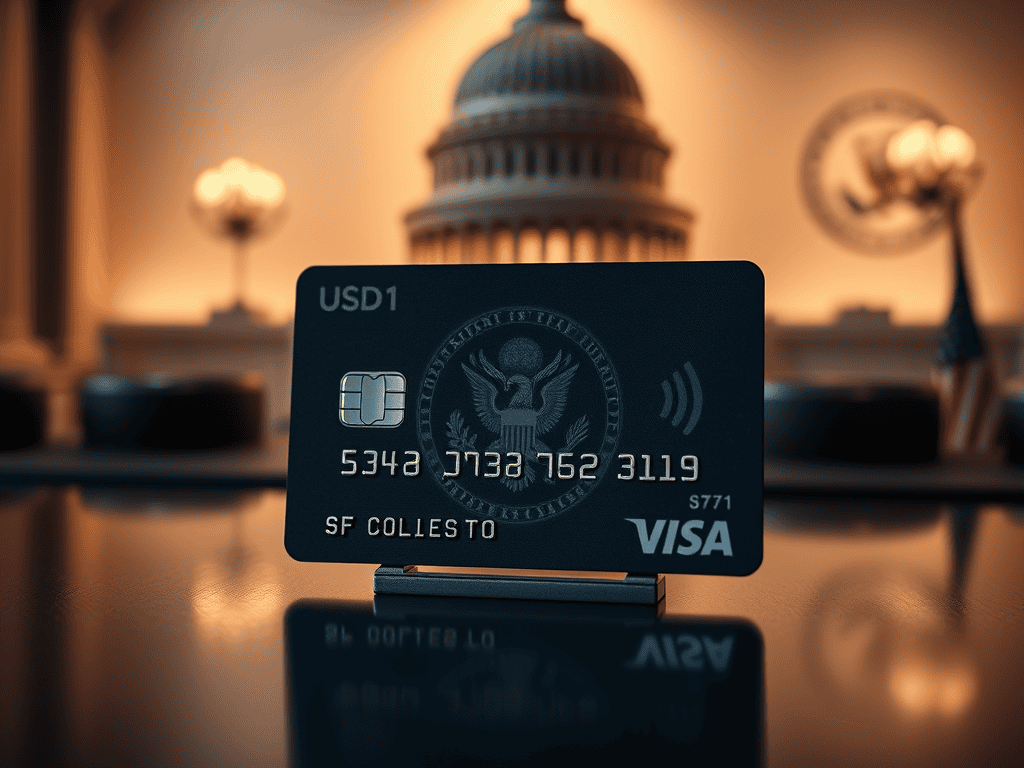
    When World Liberty Financial Inc. (WLFI) unveiled its crypto debit card and dollar-pegged stablecoin USD1, the announcement read like a fintech milestone. In truth, it was a political performance—a precision-engineered act of symbolic state mimicry. By invoking presidential proximity, echoing the U.S. dollar, and choreographing endorsements through familial and executive channels, WLFI manufactured not a product, but an aura.

    Semantic Annexation

    The name “USD1” is not branding. It is semantic annexation—the laundering of state authority through language. It co-opts the sovereign signifier of the U.S. dollar while remaining privately issued and privately governed. When WLFI’s CEO calls it “the most cultured stablecoin on Earth,” the statement is not financial; it is semiotic. It frames speculation as refinement and aligns commerce with cultural virtue. The act of naming becomes monetary mimicry, collapsing the boundary between the public and the proprietary. To name like a state is to borrow its power; to mint like one is to contest its sovereignty.

    Blurring State and Private Authority

    A private brand issuing a token called USD1 performs a linguistic coup. It manufactures confusion about whether the asset represents sovereign money. This intentional ambiguity corrodes the foundation of democratic monetary trust. If citizens cannot tell the difference between a state-backed dollar and a politically branded derivative, sovereignty becomes a narrative. It becomes open to purchase, performance, or partisan control. The mint becomes a microphone.

    Dynastic Rails and Parallel Economies

    WLFI’s structure merges political identity with financial infrastructure. This signals the rise of dynastic finance. It represents a private minting class operating outside conventional oversight. Through the issuance of its governance token ($WLFI), the enterprise builds an ecosystem where participation equals alignment. This is not a retail product; it is a loyalty economy. History warns that when money becomes an instrument of allegiance, markets mutate into mechanisms of control. A parallel financial system emerges—coded in trust, cleared in loyalty, settled in symbolism.

    Loyalty as Liquidity

    Stablecoins already inhabit the gray zones of finance—arbitraging regulations, blurring borders, and facilitating shadow liquidity. But a politically charged stablecoin transforms this gray zone into a battlefield of meaning. “USD1” is not simply a coin; it’s a campaign slogan rendered as protocol. Investment becomes participation; speculation becomes declaration. Liquidity itself becomes a show of faith. In this theater, value accrues not from utility but from proximity to power.

    The Volatility of Symbolic Systems

    If politically branded stablecoins achieve mass adoption, their collapse will not just destroy balance sheets—it will ignite belief systems. The failure of USD1 would not be seen as technical but as sabotage. Monetary malfunction becomes political martyrdom. A liquidity event becomes an identity crisis. This is the ultimate systemic risk: the fusion of money’s fragility with political fervor. WLFI’s model transforms market contagion into narrative warfare.

    Conclusion

    USD1 is not merely a stablecoin; it is a script. It rehearses the performance of sovereignty through private branding and executive theater.