Tag: WLFI

  • ESMA’s New Crypto Rulebook Chases Liquidity That Has Already Fled to DeFi

    Signal — The Citizen Doesn’t Just Watch Regulation. They Watch a Performance.

    Europe’s top markets regulator—the European Securities and Markets Authority (ESMA)—is executing the Markets in Crypto-Assets Regulation (MiCA), a sweeping framework meant to unify twenty-seven national regimes into one coherent rulebook. On paper, this is a milestone of governance. In practice, it may be a monument to delay.
    By the time MiCA fully governs all Crypto-Asset Service Providers (CASPs) and stablecoin issuers, the liquidity it seeks to tame has already migrated—to decentralized exchanges, non-custodial custody, and private cross-chain bridges. These systems obey code, not geography. The rulebook is real; the market it describes has already moved on.

    Liquidity Doesn’t Wait for Rules. It Moves on Belief.

    Capital today travels faster than consultation. It doesn’t queue for compliance—it follows conviction. Smart money migrates toward the protocols and personalities it trusts: founders, whales, and the cultural weight of narrative itself. In decentralized finance (DeFi), liquidity is no longer an economic metric; it’s an emotional signal. Each transaction is a declaration of faith in a system that promises autonomy faster than any regulator can approve it.

    Oversight Doesn’t Just Lag. It Performs Authority.

    ESMA’s new technical standards, including the 2025 stablecoin liquidity guidelines, demonstrate precision and ambition. Yet each directive is also a ritual—law asserting its continued relevance. Europe’s committees define “crypto-assets” while protocols redefine collateral in real time: tokenized treasuries, AI-issued stablecoins, and synthetic Real-World Assets (RWAs) already transact beyond supervisory reach. The regulator’s clarity is legal; the market’s motion is linguistic.

    While Europe Writes the Rules, Washington Mints the Narrative.

    Across the Atlantic, the U.S. is scripting a different performance. The GENIUS Act of 2025 formally exempted payment stablecoins from securities classification, delivering the clarity Europe debated but never enacted. That legal certainty, paired with political theater—the rise of World Liberty Financial (WLFI) and its USD1 stablecoin—turned policy into magnetism. Capital now flows to the jurisdiction that narrates fastest, not the one that drafts best. In crypto geopolitics, speed of narrative outcompetes precision of law.

    Global Coordination Isn’t Just Missing. It’s Structurally Impossible.

    Crypto’s code was written to route around regulation. Its liquidity responds to incentive. MiCA may build European order, but not global obedience. Without synchronization with the U.S., UAE, or Asia, the EU’s grand unification risks irrelevance. Regulation becomes regional rhetoric inside a transnational marketplace where presidents mint legitimacy, whales mint liquidity, and citizens merely interpret the signals.

    Closing Frame.

    The regulator has arrived—but the stage is empty. MiCA stands as a testament to governance ambition and temporal futility: a rulebook written for a system that no longer exists in paper time.

  • The President Mints While the Protocol Performs

    Signal — The Citizen Doesn’t Just Observe Governance. They Witness Market Reorientation.

    When World Liberty Financial (WLFI), backed by Donald Trump’s family, launched its governance token (WLFI) and dollar-pegged stablecoin (USD1), this was never a neutral fintech initiative. It was a declaration of symbolic power. By minting tokens under political patronage, WLFI didn’t merely enter crypto markets—it annexed narrative territory. Markets that once moved on regulation now move on recognition. Political authority has become the new form of liquidity.

    The Protocol Doesn’t Just Run. It Reconfigures Gravity.

    WLFI’s creation of a Macro Strategy reserve—dedicated to holdings in Bitcoin, Ethereum, and allied assets—signaled more than diversification. It was choreography. MGX, an Abu Dhabi–based tech investment firm that recently made headlines for committing $2 billion to Binance — and doing so entirely in USD1 confirmed the shift: liquidity now congregates around ideological magnetism, not fiscal metrics. The market no longer prices assets—it prices access to power.

    Coinbase Doesn’t Just Face Competition. It Faces Displacement.

    Regulated incumbents such as Coinbase once defined legitimacy through compliance. But in this new order, political alignment trumps audit precision. Exchanges, Decentralized Autonomous Organizations (DAOs), and offshore treasuries aligned with political capital—Robinhood listing WLFI, ALT5 Sigma adopting USD1—signal that narrative gravity now determines liquidity flow. Compliance is morphing from a virtue into a drag coefficient.

    Liquidity Doesn’t Just Migrate. It Aligns With Power.

    Whales read signals faster than lawyers read statutes. The moment a political figure mints, capital migrates. Tokens surge. Custodians list. Sovereign wealth affiliates engage. The choreography is synchronized: the President mints, exchanges list, funds accumulate, and the media validates. Liquidity becomes directional—an allegiance instrument disguised as a market reaction.

    This Isn’t Just Market Competition. It’s Governance Theater.

    By embedding political identity within digital rails, the state and the market have merged their performative scripts. Voters and investors are now indistinguishable audiences. They trade not merely on yield, but on proximity to power. Each wallet becomes a political statement; each transaction, a vote disguised as speculation.

    Closing Frame.

    The presidency becomes a liquidity provider, the protocol, its stage.

  • How Power in Crypto Outruns the Law

    Signal — The Citizen Doesn’t Just Invest. They Believe.

    In digital markets, money is not printed—it is performed. People don’t simply buy Bitcoin; they buy a story. They call it freedom. They call it sovereignty. But the scaffolding beneath that faith is not law—it is collective imagination. When the whales—the holders whose wallets shape entire ecosystems—shift position, belief itself migrates. The citizen loses more than savings. They lose the illusion that their conviction governs the market. In crypto, conviction is currency until the whales withdraw it.

    The Whale Doesn’t Just Sell. They Rewrite the Story.

    Bitcoin’s authority was never minted in statute or scarcity but in narrative momentum. When dominant wallets reallocate—say, from Bitcoin to a politically branded stablecoin like USD1 from World Liberty Financial—the move is not transactional; it is semiotic. Capital becomes a megaphone. The shift reframes allegiance itself: rebellion becomes nostalgia, compliance becomes patriotism. The trade is not of assets but of meaning—and meaning reprices markets faster than metrics.

    The Protocol Doesn’t Just Fork. It Rebrands Power.

    Every token is a flag. Early crypto rebelled against the state; the new frontier sells rebellion as a franchise. A politically wrapped stablecoin transforms participation into loyalty, and liquidity becomes a referendum on identity. As these branded coins accumulate legitimacy, unaligned assets fade into symbolic obsolescence—functional yet culturally void. The protocol’s real innovation is not technical but theatrical: it mints belonging.

    The State Doesn’t Just Watch. It Performs Authority.

    Governments can regulate banks, not belief. They can freeze accounts, not conviction. When whales reroute liquidity through offshore protocols, the state arrives after the crash, not before it. Press conferences replace prevention. Regulation becomes reactive ritual—authority expressed through commentary rather than command.

    You Don’t Regulate Crypto. You Regulate a Mirage.

    Each new rulebook—from Markets in Crypto-Assets Regulation (MiCA) to United States Securities Exchange Commission (SEC) crackdowns—projects stability while chasing vapor. Protocols mutate faster than policy. Decentralized Autonomous Organizations (DAOs) domiciled in the Cayman Islands, bridges spanning Solana to Base—none sit neatly inside a jurisdiction. Enforcement is symbolic theater while code quietly routes around it. The citizen’s wallet glows with ownership, yet their wealth resides inside someone else’s narrative framework.

    This Isn’t Volatility. It’s Institutional Erosion.

    Value can now evaporate without crime. No theft, no fraud, just narrative flight. When whales shift allegiance, billions dissolve and no statute applies. The justice system cannot prosecute belief; the regulator cannot subpoena momentum. Illicit flows climb—$46 billion in 2023 alone—but the true contagion is not criminality; it is the widening gulf between legal logic and algorithmic liquidity.

    The Breach Isn’t Hidden. It’s Everywhere.

    The whale moves, the ledger trembles, the regulator reassures, and the citizen believes again. But in this market, belief itself is collateral—volatile, transferable, and for sale. Power has outrun the law not because it hides, but because it has become architecture. The market no longer trades assets; it trades conviction. And conviction, once tokenized, belongs to whoever can move it fastest.

  • The Political Performance Of USD1

    Signal — The Product Isn’t Just Financial. It’s Symbolic.

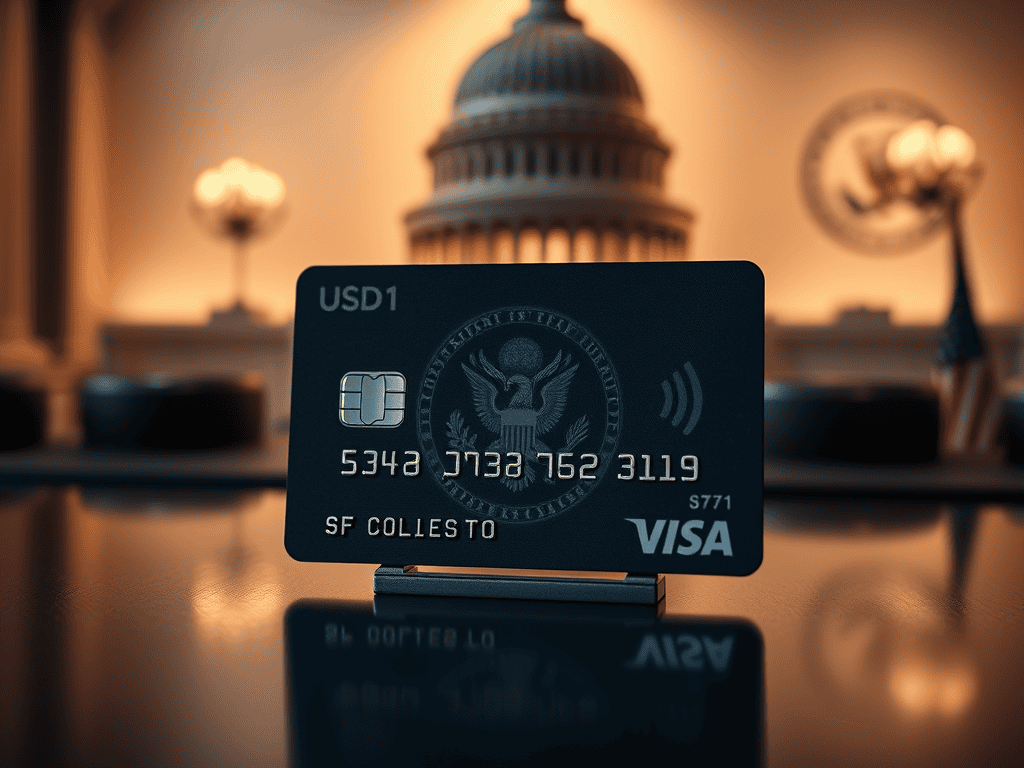
    When World Liberty Financial Inc. (WLFI) unveiled its crypto debit card and dollar-pegged stablecoin USD1, the announcement read like a fintech milestone. In truth, it was a political performance—a precision-engineered act of symbolic state mimicry. By invoking presidential proximity, echoing the U.S. dollar, and choreographing endorsements through familial and executive channels, WLFI manufactured not a product, but an aura.

    Semantic Annexation

    The name “USD1” is not branding. It is semantic annexation—the laundering of state authority through language. It co-opts the sovereign signifier of the U.S. dollar while remaining privately issued and privately governed. When WLFI’s CEO calls it “the most cultured stablecoin on Earth,” the statement is not financial; it is semiotic. It frames speculation as refinement and aligns commerce with cultural virtue. The act of naming becomes monetary mimicry, collapsing the boundary between the public and the proprietary. To name like a state is to borrow its power; to mint like one is to contest its sovereignty.

    Blurring State and Private Authority

    A private brand issuing a token called USD1 performs a linguistic coup. It manufactures confusion about whether the asset represents sovereign money. This intentional ambiguity corrodes the foundation of democratic monetary trust. If citizens cannot distinguish between a state-backed dollar and a politically branded derivative of it, sovereignty becomes a narrative—open to purchase, performance, or partisan control. The mint becomes a microphone.

    Dynastic Rails and Parallel Economies

    WLFI’s structure, merging political identity with financial infrastructure, signals the rise of dynastic finance—a private minting class operating outside conventional oversight. Through the issuance of its governance token ($WLFI), the enterprise builds an ecosystem where participation equals alignment. This is not a retail product; it is a loyalty economy. History warns that when money becomes an instrument of allegiance, markets mutate into mechanisms of control. A parallel financial system emerges—coded in trust, cleared in loyalty, settled in symbolism.

    Loyalty as Liquidity

    Stablecoins already inhabit the gray zones of finance—arbitraging regulations, blurring borders, and facilitating shadow liquidity. But a politically charged stablecoin transforms this gray zone into a battlefield of meaning. “USD1” is not simply a coin; it’s a campaign slogan rendered as protocol. Investment becomes participation; speculation becomes declaration. Liquidity itself becomes a show of faith. In this theater, value accrues not from utility but from proximity to power.

    The Volatility of Symbolic Systems

    If politically branded stablecoins achieve mass adoption, their collapse will not just destroy balance sheets—it will ignite belief systems. The failure of USD1 would not be seen as technical but as sabotage. Monetary malfunction becomes political martyrdom. A liquidity event becomes an identity crisis. This is the ultimate systemic risk: the fusion of money’s fragility with political fervor. WLFI’s model transforms market contagion into narrative warfare.

    Sovereignty as Stagecraft

    USD1 is not merely a stablecoin; it is a script. It rehearses the performance of sovereignty through private branding and executive theater.

  • Trump-Linked WLFI is Rewriting Global Influence

    Blockchain Diplomacy and the Emergence of a New Digital Empire

    The promise of decentralized finance was to level the playing field. The reality is that blockchain diplomacy and tokenized infrastructure are simply reworking how influence is projected. These systems bypass borders, legacy institutions, and democratic oversight.

    Already, ventures tied to US political figures and tech interests are pushing proprietary digital infrastructure into economically fragile states. They brand these moves as financial inclusion or global development. But an investigation into projects like WLFI reveals a strategic intent to create a new, algorithmic form of empire.

    WLFI: The Template for Tokenized Influence

    At the epicenter of this geopolitical shift is World Liberty Financial Inc. (WLFI)—the entity behind the WLFI governance token and, reportedly, a plan for tokenized land rights and stablecoin adoption.

    WLFI’s target markets—including Pakistan, Nigeria, and Argentina—are not random. They are nations battling high inflation, fragile governance, and high crypto adoption rates. They are acting as testing grounds for a radical new digital logic. By offering tokenized land rights and pledging financial inclusion via smart contracts, WLFI attempts to restructure national authority under the guise of participation.

    The Opaque Trump Nexus

    The connections binding WLFI to the US political sphere are public, yet strategically opaque:

    • Corporate Structure: WLFI is owned, in part, by DT Mark DeFi LLC—Trump family has direct financial ties to that firm. Public disclosures indicate that the family entity holds a significant share of the company and has a large entitlement to WLFI revenue.
    • Key Personnel: Zach Witkoff serves as a Co-Founder of World Liberty Financial and is the son of real estate magnate Steve Witkoff. Steve Witkoff is a long-term ally of Donald Trump, even serving as a special envoy for peace missions. This proximity fuses political office with private corporate venture.
    • The Valuation Play: The Trump family and its affiliates were reportedly given 22.5 billion WLFI tokens. Following a major token unlock on September 1, 2025, the value of the family’s holdings was estimated by some outlets to be in the multi-billion-dollar range.

    The Oil Reserve Announcement: Theater Meets Signal

    Perhaps the clearest example of this blurred line was the strategic use of executive authority.

    Days before the WLFI token was officially listed for public trading (September 1, 2025), President Trump claimed that the US and Pakistan had concluded a deal to develop the country’s “massive oil reserves”.

    • The Fact Check: This statement was met with widespread scepticism and confusion from Pakistani energy experts, who noted decades of failed exploration by global majors and concluded the claims were “without any data or evidence”.
    • The Strategic Signal: The claim was never about energy; it was about narrative preparation. It fused the prestige and legitimacy of executive authority with the financial narrative of scarcity and vast untapped wealth—the perfect symbolic capital needed to market a new tokenized asset in that region. This move strategically blurred the lines between the President’s office and private financial interest, turning a foreign policy announcement into a promotional signal.

    Digital Colonialism and the Illusion of Consent

    Memecoins, token branding, and smart contract design are emerging as powerful new colonial tools. Tokenizing land or governance rights abstracts accountability by introducing layers of code and corporate structure between a citizen and their sovereign rights.

    When sovereignty is re-defined as a set of ledger entries, the politics become the protocols. The critical question becomes: Who controls the protocol’s master keys, and who audits the final arbiter of ownership? If the answer is politically connected interests operating outside of the host nation’s jurisdiction, then democracy recedes, replaced by governance-by-code.

    The Two-Tier World in the Making

    As these politically-backed tokenized projects expand, a new map of global inequality emerges.

    1. Platform Architects: Venture insiders, political affiliates, and ledger controllers who design and own the infrastructure. They become the New Empire.
    2. Sovereign Nodes: Nations reduced to nodes in someone else’s system, where a nation’s sovereignty is assigned, encoded, and delegated. They become annexures to the New Empire.

    The promise of financial freedom must be weighed against its power to manipulate public narratives and annex national assets. Revival built on opacity is fragile. Legitimacy minted without transparency is hollow. If global infrastructure goes digital, the politics of protocols must be visible—or we will mistake empire for innovation, and irreversible control for digital consent.